What is Bitcoin? Bitcoin is the first cryptocurrency, a form of digital money that works without banks or governments. It runs on a public network of computers around the world, and only 21 million coins will ever exist. People use it to save, to send money across borders and as a long-term investment, and you can own as little as a few dollars’ worth.
This beginner’s guide explains how Bitcoin works, who created it, why its supply is limited and what affects its price. In addition, it covers the main risks and the simplest way to get your first Bitcoin without a bank card.
What Is Bitcoin in Simple Terms
To begin with, think of Bitcoin as digital cash that nobody controls. When you send euros through a bank, the bank checks your balance and moves the money. With Bitcoin, there is no bank. Instead, thousands of computers keep the same record of every payment and agree on which ones are valid.
Bitcoin at a glance
As a result, Bitcoin works 24 hours a day, in every country, and nobody can freeze or reverse a payment once it is confirmed. That is both its biggest strength and, as we will see later, one of its main risks.

Who Created Bitcoin
Bitcoin was created by a person or group using the name Satoshi Nakamoto. In October 2008, Satoshi published a short paper describing “a peer-to-peer electronic cash system”. Then, on January 3, 2009, the first Bitcoin block was mined, and the network went live.
Interestingly, nobody knows who Satoshi really is. Satoshi worked with early developers online for about two years and then disappeared in 2011. Many people have been named as possible candidates, but none has been proven. Today, Bitcoin is maintained by a large open community of developers, and no single person or company is in charge.
Key moments in Bitcoin history
- October 2008The Bitcoin white paper is published
- January 2009The first block is mined and the network starts
- May 2010Someone pays 10,000 BTC for two pizzas, the first well-known purchase
- 2012 to 2024Four halvings cut the reward for new blocks
- September 2021El Salvador makes Bitcoin legal tender
- January 2024US regulators approve spot Bitcoin ETFs
Today, Bitcoin is far more than an experiment. It is traded on major exchanges, held by funds and companies, and followed daily in financial news.
How Bitcoin Works
At its core, Bitcoin is a shared list of transactions. Every time someone sends Bitcoin, the payment is broadcast to the network. Then computers called nodes check that the sender really owns the coins and has not spent them already.
What happens when you send Bitcoin
Because the record is public, anyone can check any transaction. However, addresses are not linked to names, so Bitcoin is often called pseudonymous rather than fully anonymous.
The Blockchain Explained
The blockchain is the record that makes all of this possible. As the name suggests, it is a chain of blocks, and each block contains a batch of transactions. Every new block also contains a fingerprint of the block before it.
This is what makes the record so hard to change. If someone tried to edit an old payment, the fingerprint of that block would change, and every later block would stop matching. To hide the change, the attacker would need to redo all of those blocks faster than the rest of the network, which would cost an enormous amount of computing power and electricity.
Moreover, thousands of independent nodes store a full copy of the blockchain. So there is no central database to hack or switch off. For a wider introduction to these words, see our crypto terms for beginners guide.
Mining and Proof of Work
New blocks are created through mining. Miners run specialised computers that compete to solve a mathematical puzzle. The first miner to find a valid answer adds the next block and receives newly created Bitcoin plus the transaction fees in that block.
This system is called proof of work, because it proves that real work, in the form of computing power and electricity, went into each block. In practice, the puzzle adjusts its difficulty every two weeks or so, which keeps new blocks arriving roughly every 10 minutes, no matter how many miners join.
Critics point out that mining uses a lot of electricity. On the other hand, supporters say that this cost is exactly what protects the network from attacks. Ethereum, by contrast, switched to a different system called proof of stake in 2022, as explained in our guide to what Ethereum is.
Why There Will Only Be 21 Million Coins
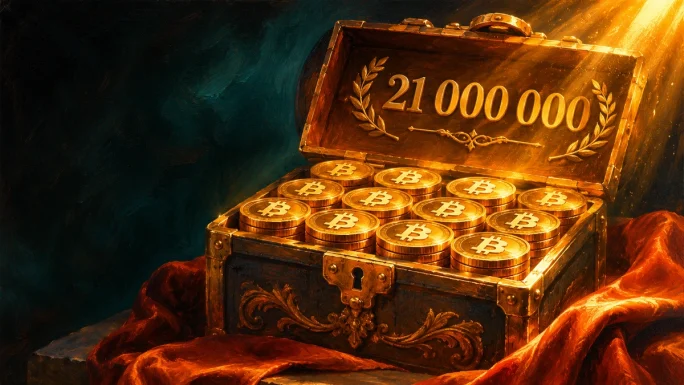
Unlike euros or dollars, Bitcoin has a fixed limit. The code allows only 21 million BTC to ever exist, and no central bank can print more. More than 20 million have already been mined, and the rest will be released slowly over the next century.
This built-in scarcity is why many people compare Bitcoin to gold and call it “digital gold”. Just as there is only so much gold in the ground, there will only ever be 21 million Bitcoin. For this reason, some people buy Bitcoin as protection against inflation, although its price can still swing a lot in the short term.
Also, keep in mind that some coins are lost forever. When someone loses the keys to a wallet, those coins can never be spent again, which makes the real supply even smaller.
The Halving and Why It Matters
Every 210,000 blocks, roughly every four years, the reward for mining a block is cut in half. This event is called the halving. When Bitcoin started, miners received 50 BTC per block. After the halving in April 2024, the reward dropped to 3.125 BTC.
Bitcoin halvings
| Halving | Block reward after |
|---|---|
| 2012 | 25 BTC |
| 2016 | 12.5 BTC |
| 2020 | 6.25 BTC |
| 2024★ Latest | 3.125 BTC |
| Next, around 2028 | 1.5625 BTC |
As a result, the number of new Bitcoin entering the market keeps falling. Many investors watch the halving closely, because past halvings were followed by large price moves. However, past patterns do not guarantee future results, and the market today is very different from 2012.
Satoshis and Small Amounts
One Bitcoin costs tens of thousands of dollars, which scares many beginners. Fortunately, you do not need to buy a whole coin. Bitcoin can be divided into 100 million smaller units called satoshis, or sats, named after its creator.
- 1 BTC = 100,000,000 satoshis
- 0.001 BTC = 100,000 satoshis
- 0.00001 BTC = 1,000 satoshis
So you can start with a small amount, such as $10 or $20, and still own real Bitcoin. In fact, many people buy small amounts regularly instead of one big purchase. Our guide on how much crypto to start with explains sensible first amounts.
Wallets, Keys and Seed Phrases
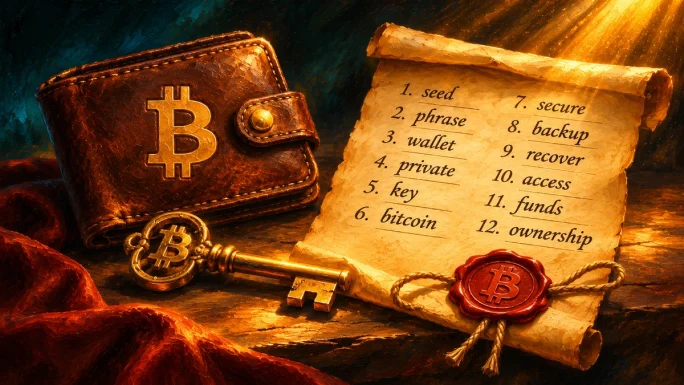
A Bitcoin wallet does not actually hold coins. Instead, it holds the keys that prove you own coins on the blockchain. Your public address is like an account number you can share. Your private key, on the other hand, is like a password that must never be shared.
- Exchange wallet: easy for beginners, but the exchange holds the keys
- Software wallet: an app on your phone or computer where you hold the keys
- Hardware wallet: a small device that keeps the keys offline, best for larger amounts
Most wallets give you a seed phrase of 12 or 24 words when you set them up. This phrase can restore your wallet on a new device, so anyone who sees it can take your Bitcoin. Read our guides to crypto wallets and seed phrases before moving larger amounts.
What People Use Bitcoin For
Over the years, people have found several practical uses for Bitcoin.
- Long-term saving, often as a small part of a wider portfolio
- Sending money abroad without a bank, at any time of day
- Paying in online shops and services that accept it
- Protecting savings in countries with high inflation or strict capital controls
- Giving crypto as a present, for example with a gift card
In addition, faster payment layers such as the Lightning Network let people send small amounts of Bitcoin almost instantly and for very low fees. Still, most people today hold Bitcoin as an investment rather than spend it every day. If you are thinking about giving it as a present, our guide on how to give crypto as a gift covers the options.
ETFs and Big Investors
For years, Bitcoin was mostly bought by individuals. That changed in January 2024, when US regulators approved spot Bitcoin ETFs. These funds hold real Bitcoin and trade on the stock market like shares, so pension funds and ordinary investors can get exposure through a normal brokerage account.
Since then, ETF flows have become one of the biggest drivers of the price. When money flows into the funds, they must buy Bitcoin, and when investors sell, the funds sell too. In addition, some listed companies hold Bitcoin on their balance sheets, and a few countries hold it in their reserves. As a result, Bitcoin now reacts much more to global financial news than it did in its early years.
Bitcoin Price in 2026
Bitcoin’s price is set by supply and demand on exchanges around the world, so it changes every second. In mid-November 2026, Bitcoin trades around $64,000 to $65,000, after briefly falling to its lowest level since July. At the same time, US spot Bitcoin ETFs have seen large outflows, which has weighed on the price.
- Demand from investors, funds and ETFs
- Interest rates and decisions by central banks
- News about regulation and big companies
- The four-year halving cycle
- General market mood, including tech stocks
Clearly, big moves of 10% or more in a single week are normal for Bitcoin. Therefore, never invest money you might need soon. For the latest market updates, see our Bitcoin Q4 2026 outlook.
Risks to Know Before You Buy
Bitcoin is exciting, but it is not risk-free. Before you buy, it helps to know both sides.
Bitcoin pros and cons
- No bank or government can freeze it
- Fixed supply of 21 million coins
- Works worldwide, 24 hours a day
- Easy to start with small amounts
- Price can swing sharply
- Payments cannot be reversed
- Lost keys mean lost coins
- Scammers target beginners
Beginner mistakes with Bitcoin
Sharing a seed phrase or gift card codeFix: no real company or support agent will ever ask for it.
Investing money needed for billsFix: only use money you can leave untouched for years.
Sending to the wrong address or networkFix: copy addresses carefully and send a small test first.
Falling for “double your Bitcoin” offersFix: these are always scams, so ignore them.
For more warning signs, read our guide to common crypto scams.
Is It Legal to Own
In most countries, owning Bitcoin is legal. However, the rules differ a lot. Some countries treat it like property, others like a foreign currency, and a few restrict or ban it altogether.
In the European Union, the MiCA regulation now sets common rules for crypto companies, including exchanges that serve EU customers. For users, this means more protection, but also identity checks when you open an account. Our guide to MiCA in 2026 explains what changed.
Also, remember that profits from selling Bitcoin are taxable in many countries. Rules vary by country, so keep a record of your purchases and check the local tax rules or ask an adviser.
Bitcoin vs Ethereum
Ethereum is the second-largest cryptocurrency, and beginners often wonder how it differs from Bitcoin. In short, Bitcoin focuses on being money, while Ethereum is a platform for apps.
Bitcoin or Ethereum
Verdict: Bitcoin suits people who want a simple, scarce digital asset. Ethereum suits people interested in the apps built on crypto. Many beginners hold a little of both.
Similarly, stablecoins such as USDC are a third option, because they track the US dollar instead of moving up and down. Our guide on stablecoins vs volatile coins explains when each makes sense.
How to Get Your First Bitcoin
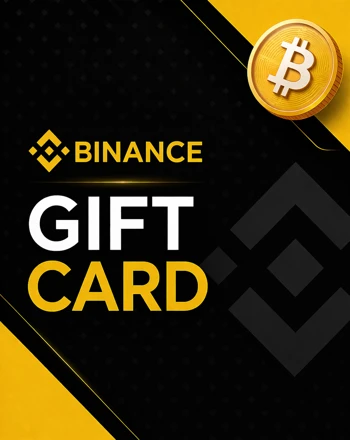
The easiest way to get your first Bitcoin is through a large exchange such as Binance. However, many beginners do not want to link a bank card to a crypto exchange. In that case, a Binance gift card is a simple alternative.
Get Bitcoin with a Binance gift card
From $0.50 to $200
Binance Gift Card BTC
An official Binance gift card that adds Bitcoin straight to your Binance account, with no bank card linked to the exchange.
Buy Binance Gift Card BTCTopGift tip
Start with a small BTC card, redeem it and get used to the app first. Once you understand how sending and receiving works, you can add more step by step.
For a full walkthrough, see our guide on how to buy Bitcoin with a gift card. You can also browse every coin in our crypto gift cards section.
Cashing Out When You Need To
Sooner or later, many holders want to turn some Bitcoin back into euros or dollars. On a large exchange, this usually means selling BTC for a currency or a stablecoin and then withdrawing to a bank account or card.
- Sell on the exchange for euros, dollars or a stablecoin like USDC
- Withdraw to your bank account, where the exchange supports it
- Use peer-to-peer trading to sell directly to other users
- Keep part of your Bitcoin if you still believe in the long term
Before selling, check the fees and withdrawal limits, since they differ between methods. For a step-by-step guide, read how to cash out crypto.
What Is Bitcoin FAQ
Bitcoin is digital money that works without banks. A worldwide network of computers keeps track of who owns which coins, and only 21 million will ever exist.
Nobody owns the Bitcoin network. It is run by thousands of independent computers and maintained by an open community of developers.
Yes. Bitcoin can be split into 100 million satoshis, so you can buy as little as a few dollars’ worth.
The network itself has run since 2009, but the price is volatile and lost keys or scams can cost you your coins. Keep your seed phrase private.
You can buy a Binance Gift Card BTC and redeem it in your Binance account.
Key Takeaways