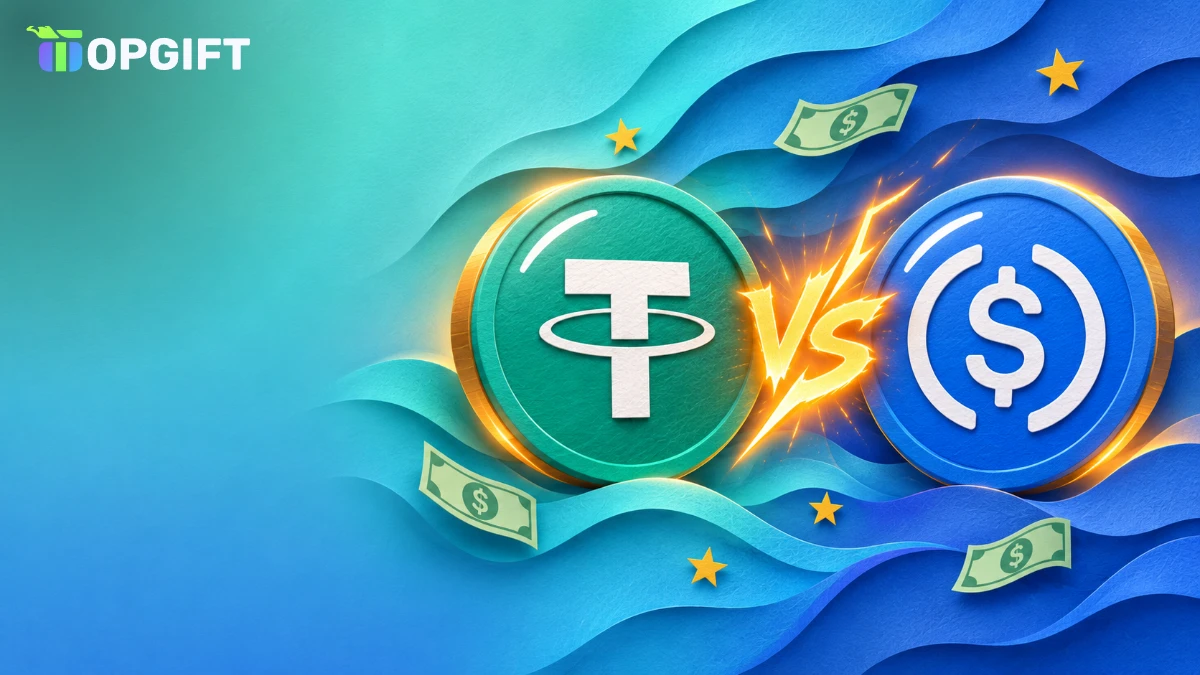
USDC vs USDT is the most common question for anyone who wants to hold digital dollars. Both are stablecoins worth one US dollar, and both run on many blockchains. However, they differ a lot in who issues them, how their reserves are held and where you are allowed to buy them. In short, USDT is bigger and dominates global trading, while USDC is more regulated and has become the main dollar stablecoin for users in the European Union.
Below, we compare the two in detail: market size, reserves, regulation, networks, fees and safety. We also explain what the EU rules mean for you and how to get USDC without a bank card.
USDC vs USDT in One Minute
To begin with, here is the short version. If you live in the EU, USDC is the practical choice, because regulated exchanges there no longer offer USDT trading. Outside Europe, both work, and the best choice depends on what you need.
USDT or USDC
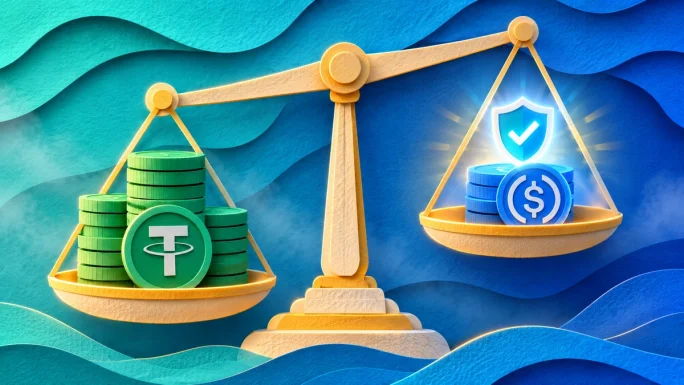
Verdict: USDT wins on size and trading volume, while USDC wins on transparency and access in the EU.
In other words, neither coin is simply “better”. Instead, each fits a different situation, and many people end up using both at different times.
What Is USDT
USDT, also called Tether, is the oldest and largest stablecoin. It launched in 2014, and its issuer, Tether, is a private company based outside the United States. For each USDT, Tether says it holds reserves worth at least one dollar.
Because it has existed the longest, USDT is everywhere in crypto trading. Most exchanges outside the EU price many coins against USDT, and it is especially popular on the TRON network, where transfers are cheap. As a result, it is often the default dollar in Asia, Latin America and many emerging markets.
What Is USDC
USDC, short for USD Coin, is issued by Circle, a US company that became publicly listed in 2025. Circle positions USDC as the regulated, transparent stablecoin, and it publishes regular reports on its reserves.
Since its launch, USDC has become the preferred dollar stablecoin for many banks, payment companies and regulated apps. Moreover, it is fully authorised under the EU’s MiCA rules, which is why it is still available on European exchanges. For a full introduction, see our guide on what USDC is.
USDC vs USDT Market Size in 2026
USDT is still much larger. As of November 18, 2026, USDT has a market cap of about $175 billion and USDC about $69 billion, out of a total stablecoin market of about $284 billion.
USDC vs USDT in numbers
| Metric | USDT | USDC |
|---|---|---|
| Market cap, Nov 2026 | About $175 billion | About $69 billion |
| Share of all stablecoins | About 62% | About 24% |
| Launched | 2014 | 2018 |
| Issuer | Tether | Circle |
However, size is not everything. In early 2026, USDC actually processed more transaction volume than USDT, because each USDC dollar moves around more often in payments and apps. So, while USDT holds more money, USDC is often the one doing more work.
How the Reserves Differ
Reserves are what keep a stablecoin worth one dollar, so they matter most for safety. In the USDC vs USDT debate, this is where the two coins take the most different approaches.
- USDC: backed mainly by cash and short-dated US Treasury bills, with regular independent reports
- USDT: backed largely by US Treasuries, but Tether also holds other assets such as gold and bitcoin
- Both: publish reserve reports, although USDC is generally seen as more transparent
In practice, both coins have held their dollar value through most market stress. Still, a simpler reserve made of cash and Treasuries is easier to understand, which is one reason why regulated companies tend to prefer USDC.
Regulation in the EU and the US
Regulation is where the two coins split the most. In the EU, the MiCA regulation requires a stablecoin issuer to be authorised before regulated platforms can offer its coin. Circle obtained this authorisation for USDC. Tether, on the other hand, chose not to apply for USDT.
In the US, the GENIUS Act, signed in July 2025, created the first federal rules for payment stablecoins. In response, Tether launched a separate US coin called USAT in January 2026, while USDT itself remains an offshore product. As a result, Tether now runs two dollars: USDT for the world and USAT for the US.
Why Europe Moved From USDT to USDC
For European users, the change happened step by step over two years.
How USDT left EU exchanges
- December 2024Coinbase removes USDT for users in the EEA
- March 31, 2025Binance ends USDT spot trading pairs in the EEA
- July 2025The US signs the GENIUS Act
- January 2026Tether launches its US coin, USAT
- July 1, 2026MiCA transition ends, no licensed EEA exchange offers USDT pairs
- November 2026Revolut removes USDT for EEA users
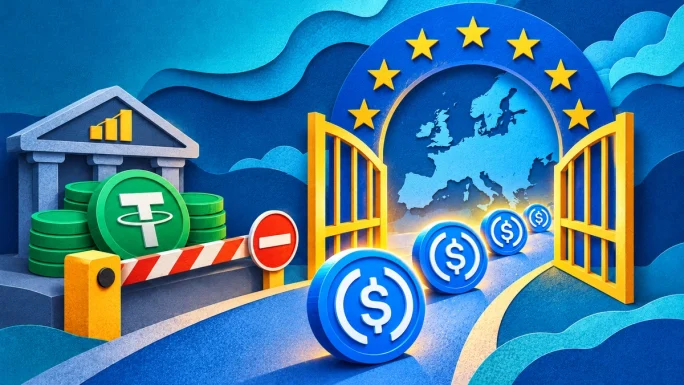
Importantly, holding USDT is not illegal in the EU. You can still keep it in your own wallet and send it on-chain. However, regulated exchanges and apps can no longer sell it to retail users, so for everyday buying and selling, USDC has taken its place.
Networks and Fees
Both coins exist on many blockchains, and the network you use decides the fee and speed. Therefore, whether you pick USDC or USDT, always check the network before sending.
Popular networks for USDT and USDC
| Network | USDT | USDC | Typical fees |
|---|---|---|---|
| Ethereum (ERC20) | Yes | Yes | Higher |
| TRON (TRC20) | Yes, very popular | Limited | Low |
| Solana | Yes | Yes, very popular | Very low |
| BNB Chain (BEP20) | Yes | Yes | Low |
| Base and Arbitrum | Yes | Yes | Very low |
For example, USDT on TRON is a favourite for cheap transfers, while USDC is strong on Solana and Base. Our guide to TRC20 vs ERC20 vs BEP20 explains the main networks.
USDC vs USDT for Everyday Use
For most people, the USDC vs USDT choice comes down to where they live and what they want to do.
- Living in the EU: choose USDC, since it is available on regulated exchanges and apps
- Trading on global exchanges: USDT usually has the most trading pairs
- Sending cheap transfers to friends abroad: USDT on TRON or USDC on Solana
- Paying with crypto cards or apps: USDC is often supported by regulated services
- Earning on Binance: check which stablecoin the product supports in your country
In addition, switching between them is usually easy on exchanges outside the EU, so your first choice is not permanent. If you want to compare stablecoins with regular coins, see our guide on stablecoins vs volatile coins.
Which Stablecoin Is Safer
No stablecoin is completely risk-free. Both coins rely on their issuer, the reserves and the banks behind them. Still, there are clear differences between USDC and USDT here.
USDC is often considered safer by regulators and institutions, because its reserves are simpler and it is licensed in the EU. USDT, by contrast, has the longest track record and the deepest liquidity, so it is very easy to buy and sell outside Europe. In short, if regulation and transparency matter most to you, USDC is the stronger pick. If global liquidity matters most, USDT still leads.
Good to knowA stablecoin can briefly lose its peg during extreme market stress. Therefore, do not treat any stablecoin as a bank account, and keep larger savings spread across different places.
Past Depegs and Controversies
History helps explain why people trust each coin differently. In 2021, US regulators fined Tether for claiming in earlier years that USDT was fully backed by dollars at all times, when its reserves also included other assets. Since then, Tether has published regular reserve reports and moved most of its reserves into US Treasuries.
USDC has had its own scare. In March 2023, Circle revealed that part of its cash reserves was held at Silicon Valley Bank, which had just collapsed. As a result, USDC briefly fell well below one dollar over a weekend, before recovering once the US authorities protected the bank’s deposits.
So both USDT and USDC have faced real tests, and both recovered. However, these events show that no stablecoin is risk-free, and that the quality of the reserves and the banks behind them really matters.
Which One Should You Pick
If you still cannot decide, this quick guide covers the most common situations.
Pick the right stablecoin
| Your situation | Best choice |
|---|---|
| You live in the EU and use regulated apps★ Most common | USDC |
| You save and spend in euros | EURI |
| You trade on global exchanges outside the EU | USDT or USDC |
| You send cheap transfers on TRON | USDT |
| You want the most transparent reserves | USDC |
Of course, you can also hold a mix. For instance, many users keep USDC for savings and payments, while using another stablecoin only when a specific app or exchange requires it.
What About EURI
If you spend and save in euros, a euro stablecoin can make more sense than a dollar one. EURI is a euro-backed stablecoin that tracks the euro instead of the dollar, so you avoid exchange-rate swings between EUR and USD that come with both USDC and USDT.
For example, if you plan to cash out to a euro bank account later, holding EURI avoids converting twice. Our guide on what EURI is explains how it works.
How to Get USDC With a Gift Card
You do not need a bank card to get USDC. Since TopGift offers USDC rather than USDT, you can buy a Binance Gift Card USDC and redeem it in your Binance account. The coins appear in your Funding wallet right away.
Get USDC with a Binance gift card

From $0.50
Binance Gift Card USDC
Official Binance gift card that adds USDC to your Binance account. A simple way to hold digital dollars without a bank card.
Buy Binance Gift Card USDCPrefer euros? The Binance Gift Card EURI works the same way, but adds euro stablecoins instead.

From €1
Binance Gift Card EURI
Official Binance gift card that adds the EURI euro stablecoin to your Binance account.
Buy Binance Gift Card EURIFor a full walkthrough, read our guide on how to buy USDC with a gift card, or browse all coins in our crypto gift cards section.
Common Stablecoin Mistakes
Whether you hold USDC or USDT, most losses come from simple mistakes rather than from the coins themselves.
Stablecoin mistakes to avoid
Sending on the wrong networkFix: instead, make sure the sending and receiving networks match, for example TRC20 to TRC20.
Buying USDT on an unlicensed EU platformFix: in the EU, use regulated exchanges and choose USDC or EURI.
Thinking a stablecoin earns interest by itselfFix: it only earns if you put it in a separate product with its own risks.
Ignoring the issuerFix: check who stands behind the coin before you hold large amounts.
TopGift tip
Before sending a large amount, send a small test transfer first. It costs a tiny fee but protects you from network mistakes.
For more beginner tips, see our crypto terms for beginners guide.
USDC vs USDT FAQ
Both are dollar stablecoins. USDT is larger and issued by Tether, while USDC is issued by Circle, uses simpler reserves and is authorised under MiCA in the EU.
Many regulators and institutions see USDC as safer because of its simpler reserves and licences, while USDT has the longest track record and the most liquidity.
You can hold it in your own wallet, but regulated EU exchanges no longer offer USDT trading to retail users.
USDT, with a market cap of about $175 billion, compared with about $69 billion for USDC in November 2026.
Buy a Binance Gift Card USDC and redeem it in your Binance account.
Key Takeaways