
Bitcoin starts the last quarter of 2026 with a lot of attention on it. After a rough first half, the price climbed sharply over the summer. September, usually its weakest month, also finished higher. Now many people are asking the same question: what happens next?
Nobody can answer that with certainty. What we can do is look at the facts. This guide covers what happened to Bitcoin in 2026 so far, what Q4 history shows and what it doesn’t, and how a beginner can approach the coming months without stress.
Not financial adviceThis guide explains past data and general principles. It isn’t a recommendation to buy or sell. Crypto prices move fast, so only use money you can afford to lose.
How Bitcoin Got Here in 2026
The year started badly. Bitcoin fell about 22 percent in the first quarter and another 14 percent in the second. Over the summer, it dropped as low as roughly $58,000.
Then the mood turned. The third quarter brought a gain of around 43 percent, one of the strongest third quarters on record. By the end of September, Bitcoin was trading in the low $83,000s.
| Period | Bitcoin performance |
|---|---|
| Q1 2026 | About −22% |
| Q2 2026 | About −14% |
| Summer low | Near $58,000 |
| Q3 2026 | About +43% |
| End of September | Low $83,000s |
In other words, Bitcoin has spent most of 2026 recovering from its early losses. Even after the summer rally, it was still roughly flat for the year in late September.
The September Surprise
September has a bad reputation in crypto. Since 2013, every positive August had been followed by a negative September. This year broke that pattern.
Bitcoin rose sharply in August and then added roughly 6 to 7 percent in September. As a result, it posted three winning months in a row, from July to September. Many traders read this as a sign of strength going into the final quarter.
However, a broken pattern is just that. It shows the market behaved differently this year, but it doesn’t guarantee anything about the months ahead.
What Q4 History Shows
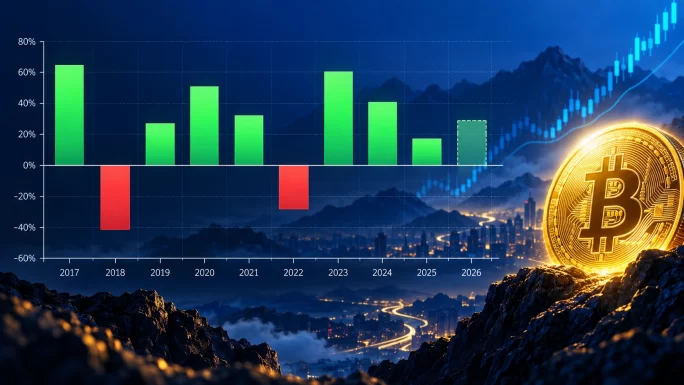
The fourth quarter has historically been Bitcoin’s strongest. Between 2013 and 2025, the average Q4 return was about 77 percent, while the median was about 48 percent.
| Q4 statistic | Value |
|---|---|
| Average Q4 return (2013–2025) | About +77% |
| Median Q4 return (2013–2025) | About +48% |
| Worst Q4 on record (2018) | About −42% |
| Q4 2025 | About −23% |
| Green Octobers (2013–2025) | 10 of 13 years |
Those numbers look impressive, but they hide a lot. A few huge years pull the average up, which is why the median is much lower. Also, Q4 is not always kind. In 2018, Bitcoin lost about 42 percent in the fourth quarter, and in 2025 it lost about 23 percent.
October, often nicknamed “Uptober,” follows the same pattern. It closed green in 10 of 13 years between 2013 and 2025. Still, last October broke a seven-year winning streak with a small loss.
Why History Is Not a Forecast
Seasonal patterns are interesting, but they are not rules. The market today is very different from the market in 2013. Bitcoin is now held by large funds, traded through ETFs and affected by interest rates and global news.
So treat Q4 history as background, not as a promise. A strong average tells you what happened before. It doesn’t tell you what will happen this year.
What Could Move Bitcoin in Q4 2026
A few factors are worth watching over the coming months.
First, ETF flows. Spot Bitcoin ETFs turned their 2026 net flows back to positive in September, with combined assets near $108 billion. Steady inflows have supported the price, while outflows could weigh on it.
Second, interest rates. US Treasury yields have been high, and the Federal Reserve makes its next decision in late October. Higher yields usually make risky assets like Bitcoin less attractive.
Third, key price levels. Analysts point to the $84,000 to $85,000 area as a zone where many long-term holders sit. Whether the price can move above it is the first test of the recovery.
How a Beginner Can Approach Q4
You don’t need to predict the market to take part sensibly. A few simple habits help a lot.
Start small. Buy an amount you would be comfortable seeing drop by half. Our guide on how much crypto to start with covers this in more detail.
Spread your purchases out. Instead of buying everything at once, you can buy small amounts over several weeks. That way, you avoid putting all your money in at a short-term peak.
Avoid chasing headlines. Sharp moves often reverse just as quickly. Make a plan before you buy, and stick to it.
Finally, keep your account safe. Use two-factor authentication on your exchange account, and never share your login details or codes with anyone.
Buying Bitcoin With a Gift Card
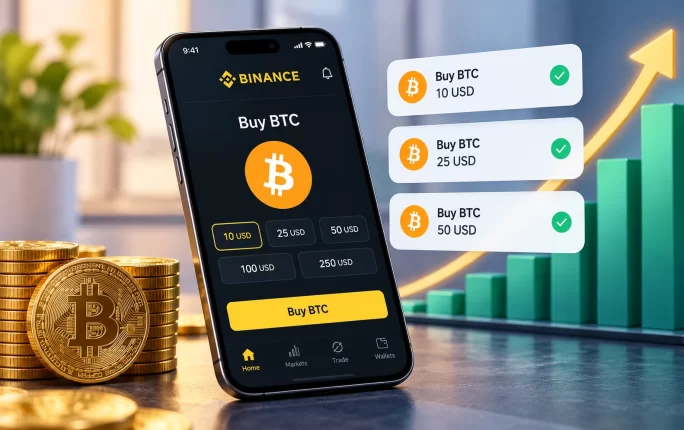
If you don’t want to link a bank card to an exchange, a Binance Gift Card is a simple alternative. You buy a card for a fixed amount, then redeem the code on Binance. The crypto lands straight in your wallet.
This also suits the “start small” approach. Cards start at very small amounts, so you can buy exactly the amount you planned and nothing more. TopGift offers Binance Gift Cards across more than fifty cryptocurrencies, including Bitcoin.
Frequently Asked Questions
Is Q4 a good time to buy Bitcoin?
Historically, Q4 has been Bitcoin’s strongest quarter on average, but it has also produced big losses, such as in 2018 and 2025. Past performance doesn’t predict future results.
What happened to Bitcoin in September 2026?
Bitcoin finished September higher, breaking a pattern in which every positive August since 2013 had been followed by a negative September.
How did Bitcoin do in Q3 2026?
It gained around 43 percent in the third quarter, after losses in the first and second quarters.
What is Uptober?
It’s a nickname for October, based on Bitcoin’s history of strong Octobers. It closed green in 10 of 13 years between 2013 and 2025.
How should a beginner buy Bitcoin?
Start with a small amount you can afford to lose, spread purchases over time and keep your account secure. A Binance Gift Card lets you buy a fixed amount without linking a bank card.