Buying crypto gets covered everywhere. Cashing it back out gets covered far less, which is odd given it’s the step that actually matters once you’re ready to use the money. This guide covers the three real ways to do it, what actually determines how much lands in your account, and the scams that specifically target people at this stage.
In this guide
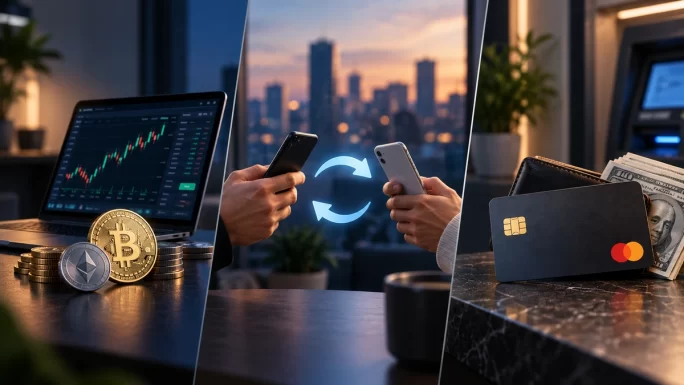
The Three Real Ways to Cash Out
Nearly every method boils down to one of three routes, and each suits a different situation.
| Method | How it works | Best for |
|---|---|---|
| Sell on an exchange | Sell for your local currency, withdraw to your bank | Most people, most of the time |
| Peer-to-peer trade | Sell directly to another person, often at a better rate | Larger amounts, more control over price |
| Crypto debit card | Spend directly from a crypto balance, converted at checkout | Everyday spending without a separate cash-out step |
Selling on an Exchange
This is the route most people already know without realising it. You sell your crypto for your local currency on the same exchange you likely bought it on, and the balance sits there as ordinary money until you withdraw it to your bank account.
It’s straightforward because the exchange handles the conversion for you — you’re not finding a buyer or negotiating a price, just taking the market rate at the moment you sell. The trade-off is that a bank withdrawal takes time, typically a business day or more depending on the exchange and your bank, and it’s rarely instant even when the sale itself completes immediately.
Peer-to-Peer Trades
A peer-to-peer, or P2P, trade means selling directly to another person rather than to the exchange’s own order book. Many major exchanges run a built-in P2P marketplace specifically for this, which adds a layer of escrow and dispute resolution rather than leaving you to arrange a private trade unprotected.
The appeal is usually price and flexibility. Because you’re setting your own terms rather than accepting whatever the exchange offers, P2P trades sometimes land better rates, particularly for larger amounts or in regions where local payment methods matter more than international ones. The trade-off is that it takes more attention — you’re reviewing offers and counterparties rather than clicking sell once.
Crypto Debit Cards
A crypto debit card skips the withdrawal step entirely. Instead of converting to cash and moving it to a bank account first, the card converts crypto to local currency at the moment you spend, the same way a normal debit card draws from a bank balance.
This suits everyday spending better than a large one-off cash-out. It’s less useful if you actually want the money sitting in a bank account — for that, an exchange sale and withdrawal remains the more direct route.
What Affects How Much You Actually Get
The number you see when you sell is rarely the number that lands in your bank account, and it’s worth knowing why before you’re surprised by it.
Trading fees apply to the sale itself, and they vary by exchange and by how you place the order. A network fee applies separately if you’re moving crypto between wallets before selling. Withdrawal fees, where they exist, apply to moving the resulting cash to your bank. Each is usually small individually, but they stack, and a platform advertising “zero fees” on one step rarely means zero everywhere.
Price movement matters too, particularly with a P2P trade or a slower withdrawal. Crypto prices move constantly, so the value at the moment you agree a trade can differ from the value once it actually settles. This isn’t a fee as such, just the nature of a moving-price asset.
One more thing worth a plain mention: how the money is taxed depends entirely on where you live, and rules vary significantly between countries. This isn’t tax advice, and it’s worth checking your own country’s current treatment of crypto gains before assuming anything.
Watching Out for Cash-Out Scams
Cashing out is exactly when scammers target crypto users, because a completed transaction is much harder to reverse than one still in progress.
A second pattern involves fake exchange or support messages. They claim a withdrawal is “stuck” and ask for a fee, a code, or remote access to unblock it. No legitimate exchange asks for a fee to release funds that are already yours. None needs your password or a one-time code to fix something on their end.
Both patterns rely on urgency. Slowing down and verifying through the exchange’s own app, rather than through a link someone sent you, defeats nearly all of them.
Frequently Asked Questions
What is the easiest way to cash out crypto?
Selling on the exchange you already use, then withdrawing to your bank account. It’s the most straightforward route for most people, even if it isn’t always the fastest or the best rate available.
How long does it take to cash out crypto?
The sale itself is usually instant. The bank withdrawal that follows typically takes a business day or more, depending on the exchange and your bank.
Is peer-to-peer trading safe?
It can be, particularly through an exchange’s built-in P2P marketplace with escrow. The main risk is releasing crypto before a payment has genuinely cleared — always confirm the funds are actually in your account first.
Do I have to pay tax when I cash out crypto?
It depends entirely on where you live, and rules differ significantly between countries. This isn’t tax advice — check your own country’s current rules before assuming anything either way.
Can I cash out crypto without an exchange?
Yes, through a peer-to-peer trade or a crypto debit card, both of which avoid a traditional exchange-and-bank-withdrawal route. Each comes with its own trade-offs around speed, rate and convenience.