Scammers don’t target crypto experts. They target newcomers — people who don’t yet know what’s normal, what’s possible, and what’s an obvious red flag to anyone who’s been around a while. If you’re new to crypto, you’re exactly who these schemes are designed for, which is the best reason to learn them before they find you.
The good news is that almost every crypto scam is a variation on a few old tricks. Once you recognise the shapes, they stop working. Here are the most common crypto scams aimed at beginners, how each one operates, and the handful of rules that defeat all of them at once.
Table of Contents
- Why Beginners Get Targeted
- The “Double Your Crypto” Giveaway
- Fake Support and Impersonation
- Phishing Sites and Fake Apps
- Pig Butchering and Romance Scams
- Fake Investment Platforms
- Rug Pulls and Too-Good Tokens
- The Rules That Beat All of Them
- Frequently Asked Questions
- Staying Safe
Why Beginners Get Targeted
Crypto has two features scammers love: transactions are irreversible, and newcomers often don’t know that. Once crypto leaves your wallet, there’s no bank to call, no chargeback, no undo. A scammer who gets you to send funds has won permanently.
Beginners are also still learning what’s plausible. An experienced user knows nobody doubles your money for free and no exchange asks for your password. A newcomer doesn’t have those instincts yet, so a confident, professional-looking scam can seem legitimate. Learning the common patterns is how you build those instincts fast, without paying for the lesson.
The “Double Your Crypto” Giveaway
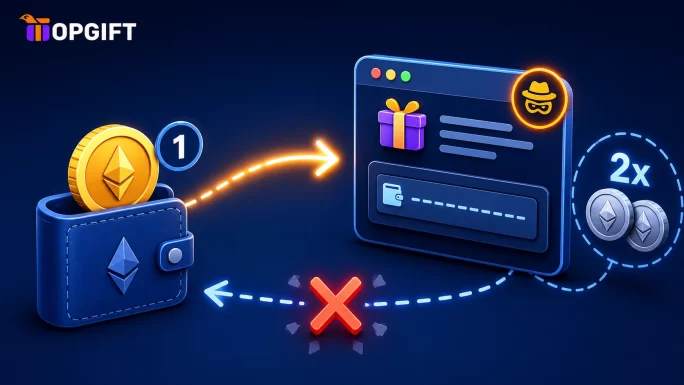
This is the classic, and it still works because it’s dressed up so well. You see a post, video, or livestream — often using a famous name or a hijacked account — announcing a giveaway: “send 0.1 BTC to this address and we’ll send 0.2 back”. Sometimes it’s framed as a celebrity event or an exchange promotion.
It is always a scam. There is no mechanism by which sending crypto to a stranger returns double — the money goes one way and never comes back. The famous name is stolen, the “proof” in the comments is fake accounts, and the countdown timer exists to stop you thinking. The rule is absolute: nobody legitimate will ever ask you to send crypto first in order to receive more.
Fake Support and Impersonation
You post a question in a crypto forum or social channel, and within minutes a helpful “support agent” messages you privately. They seem knowledgeable, sympathetic, and eager to fix your problem — and at some point they ask for your password, your recovery phrase, your gift card code, or for you to move funds to a “safe” address.
Real support never does any of this. No legitimate exchange or wallet will DM you first, ask for your recovery phrase, or need your password. Impersonators haunt exactly the places beginners ask for help, so treat any unsolicited private message offering support as a scam by default. If you need help, go to the official site yourself and use its real support channel.
The same impersonation trick drives gift-card scams, where someone talks you into entering your code somewhere that isn’t the exchange — covered in full in our post on keeping your code safe.
Phishing Sites and Fake Apps
Phishing copies a real login page so precisely that you can’t tell the difference — same logo, same layout, a web address one character off. You enter your details, and you’ve handed them straight to the scammer. Fake apps do the same through a downloaded app that looks like the real exchange but exists only to steal what you type.
The defences are simple and worth making habits. Type the address of an exchange yourself rather than clicking a link from an email, message, or ad. Check the web address carefully, since fakes rely on a letter you won’t notice. Download apps only from official app stores, and even then confirm the developer. And wherever possible, turn on two-factor authentication, so a stolen password alone isn’t enough.
Pig Butchering and Romance Scams
This one is slower and crueller. A stranger strikes up a friendship or romance — on a dating app, social media, even a “wrong number” text that turns chatty. Over weeks they build genuine trust, then mention how well they’re doing with a crypto investment and offer to help you get started. The platform they point you to is fake, and every gain you “see” is a number on a screen designed to make you deposit more.
It’s called pig butchering because the victim is fattened with fake profits before the slaughter — the moment you try to withdraw, the money is gone. The warning signs: someone you met online steering the conversation toward crypto, guaranteed returns, and a specific platform they insist you use. Never take investment advice from someone who contacted you, however warm the relationship feels.
Fake Investment Platforms
Related, but broader than romance scams. These are slick websites and apps promising high, steady, “guaranteed” returns — daily profits, referral bonuses, professional dashboards showing your balance climbing. They look like real investment platforms because effort went into making them convincing.
The tell is the promise itself. No real investment guarantees returns, and anything offering fixed daily profits or “risk-free” gains is lying. Often you can even withdraw a small amount early — that’s bait, designed to build confidence before you deposit a large sum you’ll never see again. Legitimate investing is never certain, and certainty is the scam’s signature.
Rug Pulls and Too-Good Tokens
A rug pull happens when the creators of a new coin hype it, watch people pour money in, then abandon the project and vanish with the funds — pulling the rug out. The token’s value collapses to nothing, and there’s nobody to hold accountable.
These thrive on hype and fear of missing out: a brand-new coin, promising to be the next big thing, promoted hard by anonymous accounts. For a beginner, the safest approach is to steer clear of obscure new tokens entirely and stick to established coins. A related trap is buying a “cheap” unknown coin because it looks like a bargain — cheap price per coin means nothing, as our guide to small crypto purchases explains.
The Rules That Beat All of Them
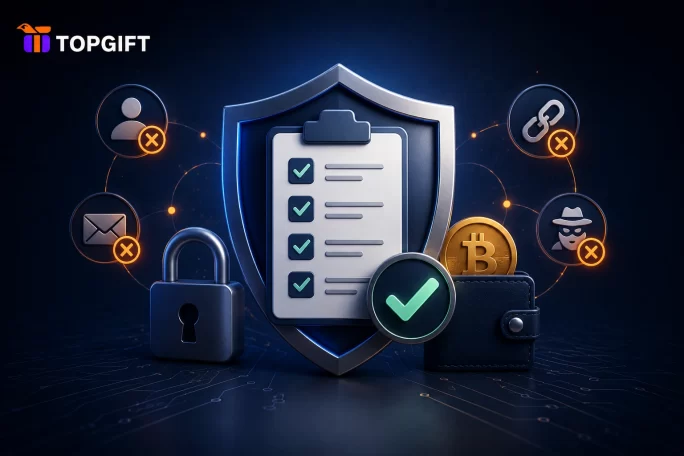
You don’t need to memorise every scam. Almost all of them fail against a short list of rules:
- Nobody doubles your money. Any offer to return more crypto than you send is a scam, without exception.
- Never share your recovery phrase or password. No legitimate service ever needs them. Anyone who asks is stealing.
- Real support doesn’t message you first. Unsolicited “support” in your DMs is an impersonator.
- Type addresses yourself. Don’t reach exchanges or wallets through links in messages, emails, or ads.
- Guaranteed returns don’t exist. Certainty is the signature of a fake platform.
- Don’t take investment advice from strangers who contacted you. That’s the whole romance-scam playbook.
- Slow down. Every scam uses urgency to stop you thinking. Anything genuine can wait.
That last one underpins all the rest. Scams need you to act before you reflect, so the simple act of pausing defeats most of them on its own.
Frequently Asked Questions
What’s the most common crypto scam?
The “double your crypto” giveaway is the most widespread — an offer to send back more than you deposit, often using a stolen famous name. It never pays out; crypto sent to a scammer is gone for good.
Can I get my crypto back after a scam?
Usually not. Crypto transactions are irreversible, with no bank to reverse them. That’s exactly why prevention matters so much, and why “recovery services” promising to retrieve lost crypto are often a second scam targeting victims.
How do I know if a crypto platform is real?
Be suspicious of any guaranteed or fixed returns — real investing carries no such certainty. Check the web address carefully, avoid platforms someone else pushed you toward, and stick to well-known, established exchanges.
Will a real exchange ever ask for my password or recovery phrase?
Never. No legitimate exchange, wallet, or support agent needs your password or recovery phrase. Anyone asking for them is trying to steal your funds, regardless of how official they appear.
Why are beginners targeted more than experienced users?
Beginners haven’t yet learned what’s normal, so a confident scam looks plausible. They may also not realise crypto transactions can’t be reversed. Learning the common patterns closes that gap quickly.
Staying Safe
Crypto isn’t uniquely dangerous — it’s just unforgiving of mistakes, because transactions can’t be undone. That puts the power in prevention, and prevention is mostly a matter of recognising a few recycled tricks and refusing to be rushed. Learn the shapes, keep the rules, and the overwhelming majority of scams simply stop working on you.
When you do buy, buying from a source you can verify removes one more variable — our post on how to spot a fake seller covers that side, and our Binance Gift Cards redeem straight through Binance, with nothing to enter anywhere else.