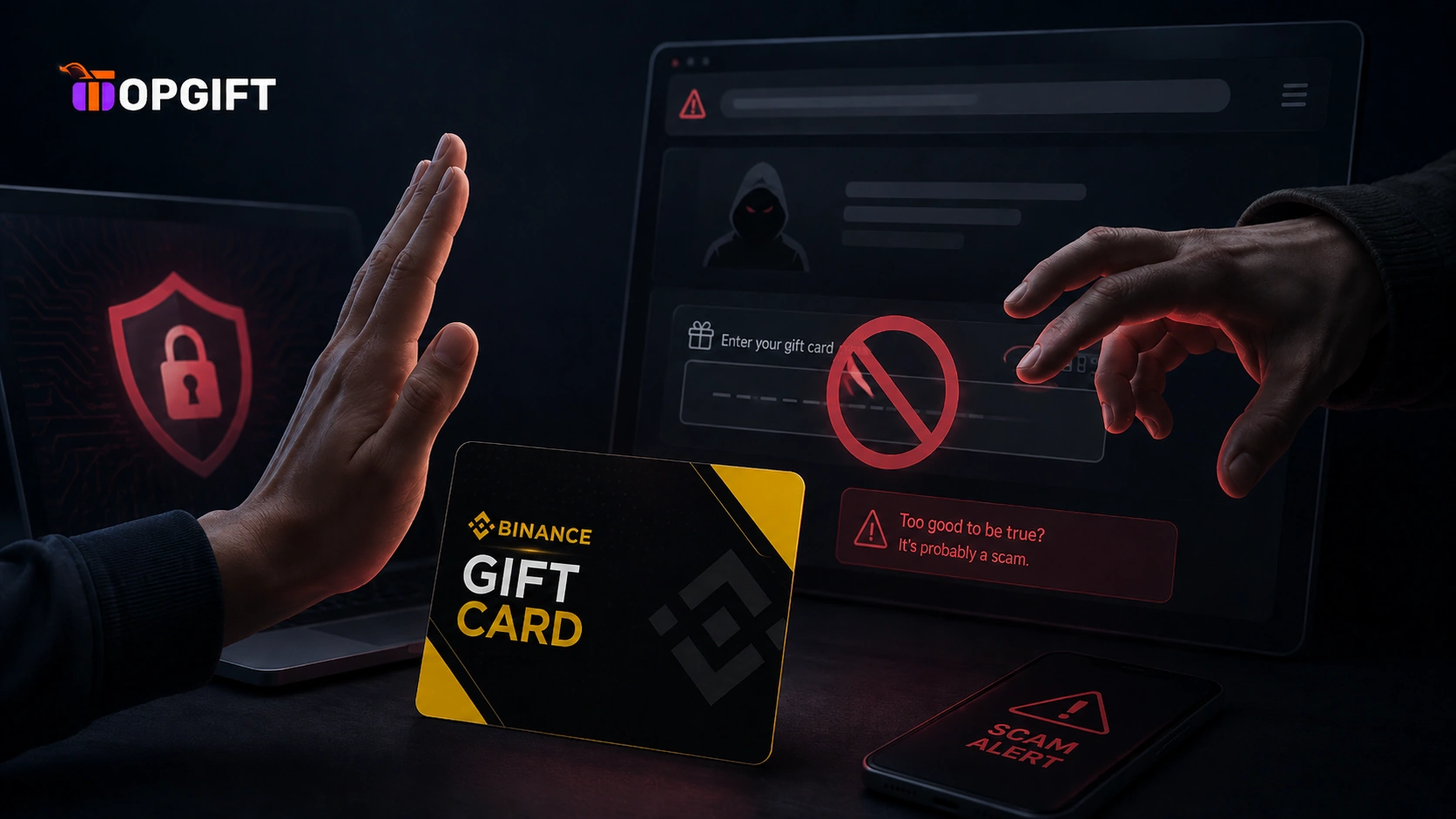
Here’s the one thing to understand about a Binance Gift Card code, and it’s the whole reason scams target them: the code is the money. Whoever types it in first gets the crypto. There’s no password protecting it, no way to reverse it, and no second chance once it’s gone.
Treat the code exactly like cash. If you dropped a €50 note in the street, it’s gone — whoever picks it up can spend it, and “but it was mine” changes nothing. A gift card code works the same way. That’s not a flaw; it’s how prepaid codes function everywhere. It just means the responsibility for keeping it safe is yours, and it starts the moment you receive it.
The Only Rule You Need
There is exactly one place a Binance Gift Card code is ever entered: Binance itself — the official app, or binance.com. Nowhere else. Not once. No exceptions.
Every scam involving these codes works by getting you to type yours somewhere that isn’t Binance. The stories vary, but the ask is always the same underneath:
- A “support agent” needs your code to “verify” or “release” your account.
- A website promises to double your crypto if you enter a code.
- Someone in a chat, a DM, or a comment needs it to “confirm your identity”.
- A “giveaway” asks for your code to “check eligibility”.
- A buyer or seller in a trade wants the code before they’ve paid.
Every one of these is theft in progress. The specific wording doesn’t matter — the instant anyone or any site that isn’t Binance asks for your code, the conversation is over. Real Binance staff will never ask for it. No legitimate service ever needs it. If someone needs your code, they are trying to spend your money, full stop.
The “You’ve Won” Phone Call
One version deserves its own warning, because it catches people who’d never fall for the others. The phone rings. A friendly voice says you’ve won something — a prize, a refund, a lottery, a tax rebate — and there’s just one small step to release it: buy a gift card and read them the code as a “processing fee”, “deposit”, or “verification”.
It is always a scam. Every single time, with no exceptions. No prize, refund, government agency, or legitimate company on earth collects a fee by asking you to buy a gift card and read out the code. That request simply does not exist in the real world — it exists only in scams. The moment a phone call, text, or email connects “you’ve won” with “buy a gift card”, you already know everything you need to: hang up.
These calls lean hard on urgency and excitement — “you must do this in the next ten minutes or you’ll lose it”. That pressure is the tell, not a detail. Anything real can wait for you to think. Scams can’t, because thinking is exactly what ruins them. If a caller ever steers you toward a gift card, put the phone down and, if you’re unsure, ask someone you trust before doing anything at all.
A Few Habits That Keep You Safe
Beyond the one rule, a little routine goes a long way.
Redeem promptly. A code sitting unused is a code that can be intercepted. Redeem it into your own account soon after you buy it, and the risk window closes.
Don’t share it, ever — not even a photo. A screenshot of a code in a chat is the same as handing over cash. If you’re giving the card as a gift, the recipient redeems it themselves; you never need to see it working.
Type the address yourself. Reach Binance by typing binance.com or opening the app directly, not by clicking a link someone sent you. Fake sites that copy Binance’s login screen are common, and they exist to catch exactly this moment.
Buy from a legitimate merchant. A code from an unofficial seller may already have been redeemed before it reaches you. Buying from a merchant listed in Binance’s own merchant directory avoids that. Our scam awareness page covers the wider tricks worth recognising.
When it’s genuinely time to redeem, our redemption guide shows exactly where the code goes — on Binance, and only there.
Keep the one rule and the rest takes care of itself: your code, on Binance, and nowhere else.