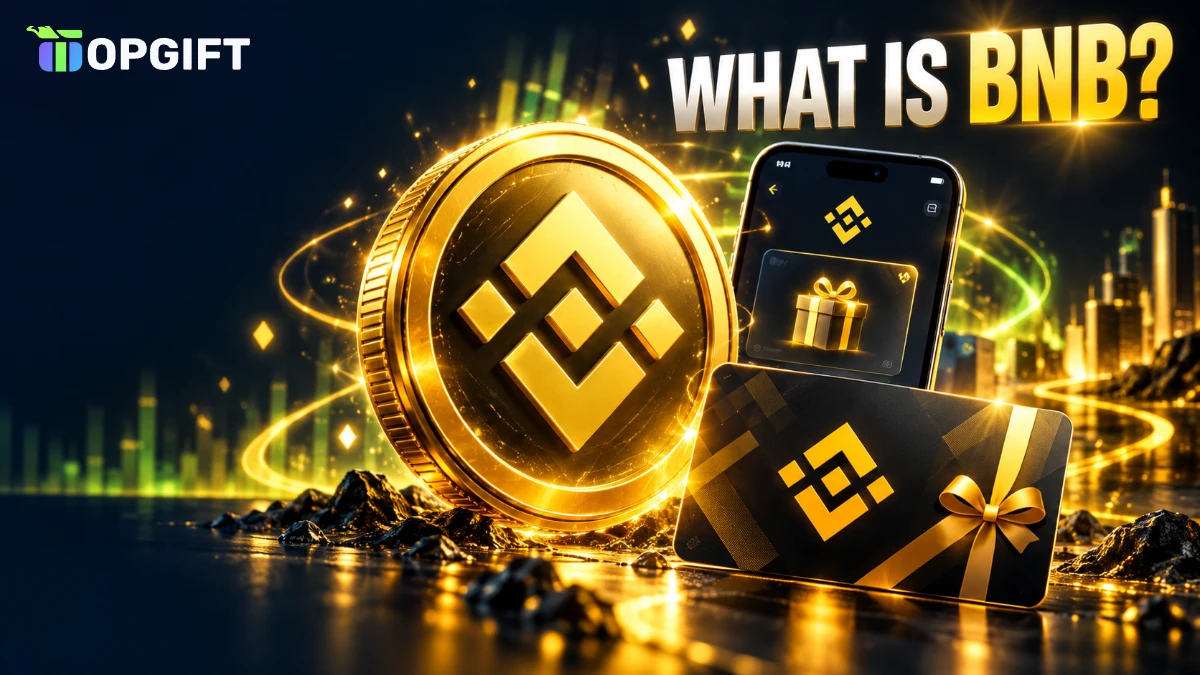
If you’ve ever opened Binance, you’ve seen BNB. It sits in the fee settings, on the earn page and in almost every promo banner. So what is BNB, and why does one exchange’s coin rank among the biggest cryptocurrencies in the world?
This guide explains where BNB came from, what you can actually do with it and how its token burns shrink the supply over time. It also compares BNB Smart Chain with Ethereum, shows how to get BNB with a gift card and covers the risks to know before you buy.
BNB is the native coin of Binance and of BNB Chain. It started in 2017 as an exchange token for cheaper trading fees and now also pays for transactions on BNB Smart Chain. Holders get a 25% discount on spot trading fees, and regular token burns reduce the total supply toward 100 million coins. You can get BNB without a bank card by redeeming a Binance Gift Card BNB.
What Is BNB
BNB is a cryptocurrency created by Binance, the largest crypto exchange by trading volume. The name originally stood for Binance Coin, but in 2022 it was rebranded as “Build and Build”, and today most people simply call it BNB.
It plays two roles at once. On the Binance exchange, it works like a loyalty token: you can use it to pay fees at a discount and to join special reward programs. On BNB Chain, it’s the fuel that pays for every transaction, much like ETH on Ethereum.
BNB at a glance
With a market value of around $96 billion, BNB is one of the largest coins after Bitcoin and Ethereum. That size comes largely from how closely it’s tied to Binance’s own ecosystem.
A Short History of BNB
BNB has changed a lot since its launch. Here are the key moments:
July 2017Binance launches BNB in an initial coin offering as an ERC-20 token on Ethereum, with a maximum supply of 200 million.
April 2019BNB moves to Binance’s own blockchain, Binance Chain.
September 2020Binance Smart Chain goes live, adding smart contracts and BEP-20 tokens.
February 2022The networks are renamed BNB Chain, and BNB becomes “Build and Build”.
2024BNB Chain Fusion retires the old Beacon Chain, so everything runs on BNB Smart Chain.
2026Quarterly burns bring the total supply down to about 133 million BNB.
In other words, BNB started as a simple discount token and grew into the main coin of a full blockchain ecosystem.
What BNB Is Used For
Most people don’t buy BNB just to hold it. Instead, they use it inside the Binance world. These are the main uses:
- Cheaper trading fees: paying spot trading fees with BNB gives a 25% discount, and futures fees get a smaller 10% cut.
- Gas on BNB Smart Chain: every transfer, swap or app action on the network is paid in BNB.
- Binance reward programs: BNB holders can join programs such as Launchpool and HODLer Airdrops, which hand out new tokens.
- Payments: you can send BNB to friends through Binance Pay or pay at merchants that accept it.
The fee discount is the reason many active traders keep a small BNB balance. Turn on the option to pay fees with BNB in your Binance fee settings, and the discount applies to every trade as long as you have enough BNB.
For savings-style rewards, our guide to Binance Earn explains how Simple Earn works and where BNB fits in.
How the BNB Burn Works
One feature makes BNB stand out: its supply keeps shrinking. Binance and BNB Chain regularly “burn” coins, which means they send them to an address nobody can access, so they’re gone for good.
There are two burn mechanisms. The first is the quarterly auto-burn, which happens four times a year. The amount depends on the BNB price and on how many blocks the network produced in that quarter. In July 2026, for example, the 36th burn removed about 1.6 million BNB, worth roughly $932 million at the time.
The second is a real-time burn on BNB Smart Chain. With every block, a share of the gas fees is destroyed automatically. It’s smaller, but it never stops.
Good to knowThe burns will continue until the total supply reaches 100 million BNB. With about 133 million left today, that point is still years away.
A shrinking supply doesn’t guarantee a higher price. Still, it’s one of the reasons long-term holders like the coin.
BNB Smart Chain vs Ethereum
BNB Smart Chain is compatible with Ethereum’s technology, so many of the same wallets and apps work on both. The main differences come down to cost and speed:
BNB Smart Chain
Native coinBNB
Token standardBEP-20
Typical feesUsually a few cents
SpeedBlocks in under a second
DecentralisationFewer validators, closely linked to Binance
Ethereum
Native coinETH
Token standardERC-20
Typical feesOften higher, especially when busy
SpeedBlocks about every 12 seconds
DecentralisationA very large, global validator set
That trade-off sums up BNB Smart Chain well: it’s cheap and fast, but more centralised than Ethereum. For small transfers and everyday use, many people find it the more practical choice.
When you withdraw tokens, the network matters. Our guide to TRC20 vs ERC20 vs BEP20 explains how to pick the right one.
How to Get BNB With a Binance Gift Card
The easiest way to get BNB without linking a bank card is a Binance Gift Card BNB. It’s a code that loads BNB straight into your Binance account:
The card comes in small steps, starting from just 0.5 USD, so it’s easy to try BNB with a small amount first. Once it’s in your account, move part of it to your Spot wallet if you want to use it for the fee discount.
BNB on Binance
Binance Gift Card BNB
Redeem the code in the Binance app and the BNB lands in your Funding wallet. Codes start from 0.5 USD.
Buy Binance Gift Card BNBIf you get stuck, our step-by-step guide on how to redeem a Binance Gift Card shows every screen.
What You Can Do With BNB Once You Have It
After redeeming, you have several options. You can keep the BNB in Spot and let it cut your trading fees. You can also put it in Simple Earn to collect rewards and qualify for HODLer Airdrops.
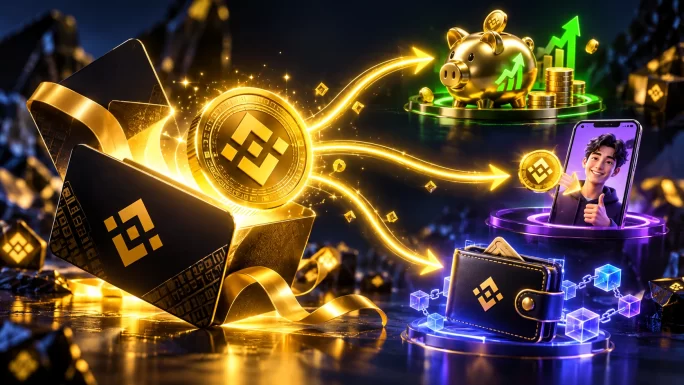
Another option is to send it. Through Binance Pay, you can transfer BNB to a friend in seconds without a network fee. To move it to your own wallet instead, follow our guide on how to withdraw crypto from Binance and choose BNB Smart Chain as the network.
ImportantWhen you withdraw BNB, pick the network your wallet supports, usually BNB Smart Chain (BEP20). Sending it over the wrong network can mean losing the funds.
Risks to Know Before You Buy BNB
BNB has real uses, but it isn’t risk-free. Keep these points in mind:
- Tied to Binance: BNB’s value depends heavily on the exchange. Legal or business problems at Binance usually hit the coin too.
- Price swings: in mid-October 2026, BNB trades around 47% below its October 2025 peak, which shows how far it can fall.
- Centralisation: BNB Smart Chain relies on a small set of validators, so it’s less decentralised than Ethereum.
- Rules by country: Binance services and features differ from country to country, so some uses may not be available where you live.
This guide explains how BNB works, but it isn’t financial advice. Only put in what you can afford to lose, and decide for yourself which coins to hold.
Frequently Asked Questions
BNB is the native coin of Binance and BNB Chain. It started in 2017 as Binance Coin, an exchange token for cheaper trading fees, and today it also pays for transactions on BNB Smart Chain and gives access to Binance reward programs.
Yes. BNB originally stood for Binance Coin. In 2022, it was rebranded as “Build and Build” when the networks became BNB Chain, but it’s the same coin. Most people now simply call it BNB.
BNB gives a 25% discount on Binance spot trading fees, pays for gas on BNB Smart Chain and lets holders join programs like Launchpool and HODLer Airdrops. You can also send it with Binance Pay or pay at merchants that accept it.
Every quarter, an auto-burn permanently removes BNB from circulation, based on the price and the number of blocks produced. A share of every transaction fee on BNB Smart Chain is burned as well. The burns continue until the supply reaches 100 million BNB.
Yes. A Binance Gift Card BNB loads BNB straight into your Binance account. Redeem the code in the app under Gift Card, then Redeem, and the BNB appears in your Funding wallet within seconds.
That depends on your goals and risk tolerance. BNB has real uses and a shrinking supply, but its value is closely tied to Binance and its price can swing sharply. This isn’t financial advice, so only invest what you can afford to lose.
Key Takeaways