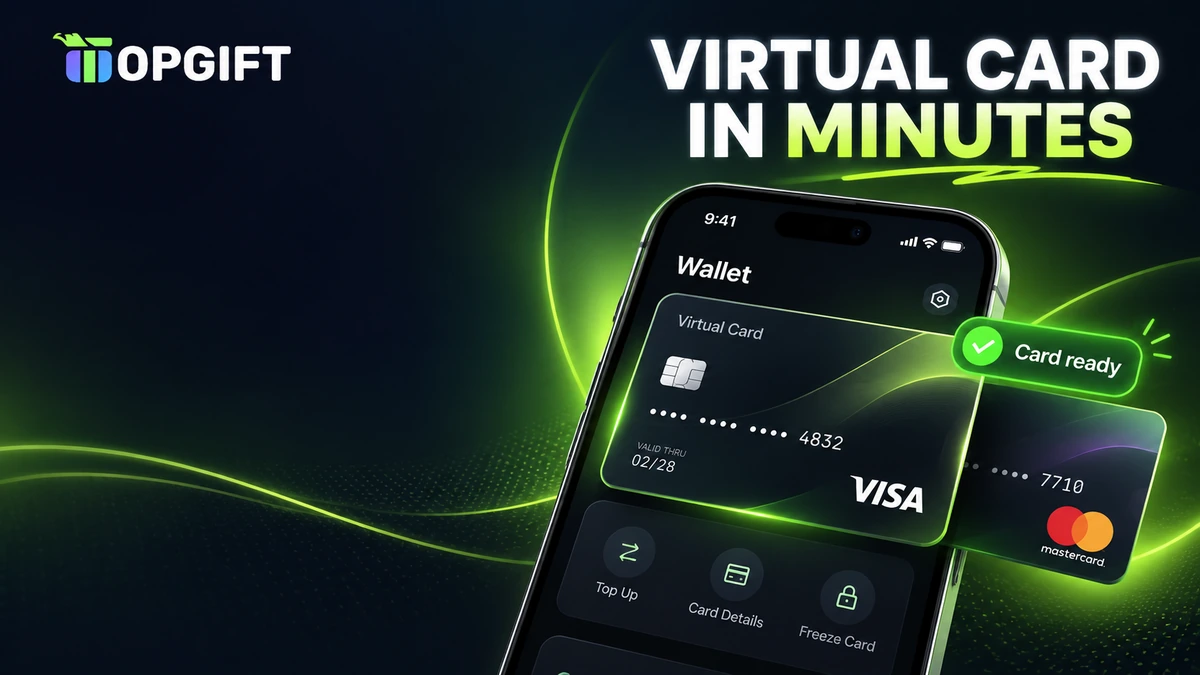
A virtual prepaid card gives you a working Visa or Mastercard number in minutes, without a bank account, a credit check or a plastic card in the post. It’s the quickest fix when your own card keeps getting declined online, or when you simply don’t want to share your bank details.
This guide explains what a virtual prepaid card is, how to get one with a prepaid voucher, and which version to choose. It also covers where these cards work, where they might not, and how to avoid the most common payment errors.
What a Virtual Prepaid Card Is
A virtual prepaid card is a Visa or Mastercard that exists only in digital form. Like any bank card, it has a 16-digit number, an expiry date and a CVV code, so you can type it into a checkout form.
The difference is where the money comes from. Instead of drawing on a bank account or a credit line, the card carries a fixed balance that you load in advance. When the balance runs out, the card simply stops paying, so you can never overspend or end up in debt.
Why People Use a Virtual Prepaid Card
People reach for a virtual card for very practical reasons. These are the most common ones:
- Their own bank card gets declined by foreign shops or subscription services.
- They don’t have a bank account, or their local cards don’t work for international payments.
- They want to keep their real card details away from a new or unfamiliar website.
- They want a fixed spending limit, for example for a teenager or a monthly budget.
- They need a card in a specific currency, such as US dollars or euros.
If you’re looking at every option for paying without a card, our guide on how to pay online without a bank card compares them all. This guide focuses on the virtual card route.
How to Get a Virtual Visa or Mastercard
The simplest way is a prepaid voucher redeemed on Rewarble. You buy a voucher for the amount you want, and Rewarble turns it into a ready-to-use virtual card. The whole process takes a few minutes.
After that, you can use the card details at any checkout that takes Visa or Mastercard. The amount you spend comes straight off the card balance.
Visa or Mastercard: Which One to Pick
Both cards work in a similar way, so the choice mostly comes down to currency and region. Here is a quick comparison:
| Card | Currency | Amounts | Where it redeems |
|---|---|---|---|
| Visa Payment Card USD | US dollars | 30 to 150 USD | Worldwide |
| Mastercard Payment Card USD | US dollars | 30 to 150 USD | Worldwide |
| Mastercard Payment Card EUR | Euros | 30 to 150 EUR | Eligible European countries |
As a rule, pick the currency you’ll actually spend in. For example, if you mostly pay US sites or subscriptions billed in dollars, a USD card avoids conversion costs. On the other hand, if you live in Europe and shop in euros, the EUR Mastercard is usually the better fit.
Visa and Mastercard are accepted in almost the same places, so neither has a real advantage there. If a specific shop lists only one of them, simply pick that one.
3D Secure, Apple Pay and Google Pay
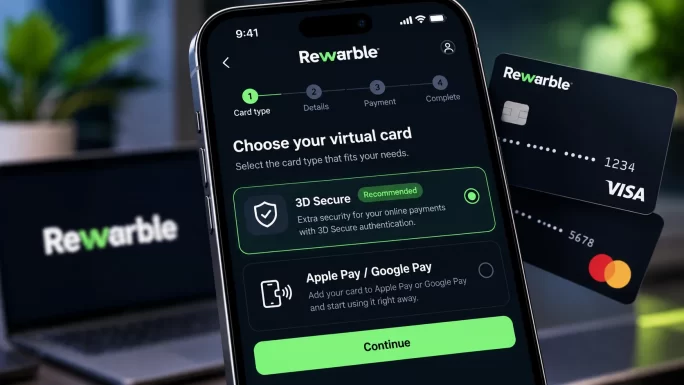
When you create the card, Rewarble lets you choose a version with or without 3D Secure, and with or without Apple Pay and Google Pay. These choices matter more than most people think.
3D Secure is the extra confirmation step many shops show at checkout. Many European merchants require it, so a card without 3D Secure can get declined there. Therefore, if you plan to shop in Europe, choose the 3D Secure version.
Apple Pay and Google Pay support, by contrast, lets you add the card to your phone wallet. As a result, you can also pay in physical shops that accept contactless payments, not just online.
Where a Virtual Card Works and Where It Might Not
A virtual prepaid card works at most online checkouts that accept Visa or Mastercard. That includes online shops, streaming and app subscriptions, software, travel bookings and many marketplaces.
However, some merchants refuse prepaid cards on purpose. This happens most often with car rentals and hotel deposits, some free trials that later turn into paid subscriptions, and some financial services. In these cases, the shop wants a regular bank or credit card it can charge later.
ImportantEnter the same name and billing address that you used when you created the card. A mismatch is one of the most common reasons a virtual card gets declined.
Also check the balance before you pay. If an order costs more than the card holds, the payment fails, so either load a bigger voucher or split the purchase.
Fees, Reloading and Refunds
Rewarble’s card fees depend on the card type you choose, and you see them before you confirm the card. So compare the options on the redeem page, especially if you plan to make many small payments.
The card is also reloadable. Instead of creating a new card each time, you can redeem another voucher onto the same card and keep the same number. That’s handy for subscriptions, because you don’t need to update your payment details every month.
Finally, if a shop refunds a purchase, the money goes back to the card balance. Keep in mind that refund times depend on the merchant and can take several business days.
Frequently Asked Questions
A virtual prepaid card is a digital Visa or Mastercard with a fixed balance. It has a card number, expiry date and CVV, but no bank account or credit line behind it.
Yes. You can buy a Visa Payment Card voucher and redeem it on rewarble.com, which issues a virtual Visa card without a bank account or credit check.
In most cases, yes. Streaming, app and software subscriptions usually accept it. Some free trials and services that charge later may refuse prepaid cards.
Yes, if you choose the version with Apple Pay and Google Pay support when you create the card on Rewarble.
Usually the name or billing address doesn’t match, the balance is too low, the shop requires 3D Secure, or the merchant doesn’t accept prepaid cards at all.
Yes. You can redeem another voucher onto the same card on Rewarble and keep the same card number.
Key Takeaways