The internet runs on cards. Almost every checkout asks for a card number, and a surprising number of people either don’t have one or would rather not use it. Many people earn their money in cash. Others keep their spending on a strict budget. And plenty just don’t want their bank details stored on yet another website.
Cash still works online, though. You just need to turn it into a code first. This guide explains how that works, the three most useful vouchers for doing it, and the mistakes worth avoiding along the way.
In this guide
Why Paying With Cash Online Still Matters
Paying with cash online sounds old-fashioned, yet the reasons people choose it are very current.
Privacy is the first. A voucher code carries no name, no card number and no bank account. The shop receives a payment, and nothing more. For anyone who has had card details leaked in a data breach, that separation is the whole appeal.
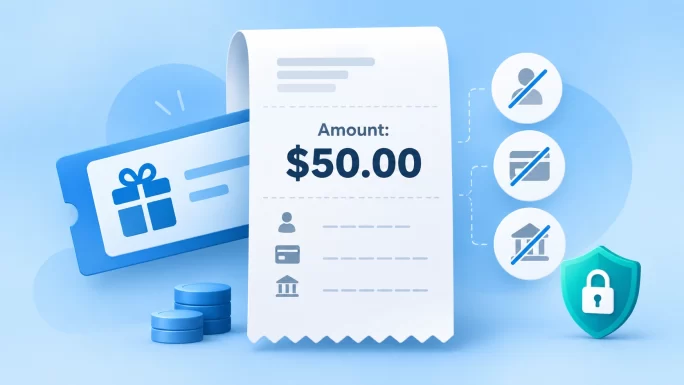
Budgeting is the second. A voucher holds a fixed amount. When it runs out, spending stops. There is no overdraft, no forgotten subscription quietly charging every month, and no surprise on the next statement.
Access is the third, and for many people the most important. Not everyone has a bank account, and not every card works for online or international payments. Students, newcomers to a country, and people between bank accounts all run into this.
If your situation is more about having no working card than about having cash, our broader guide to paying online without a bank card covers every option side by side.
How Cash Vouchers Work
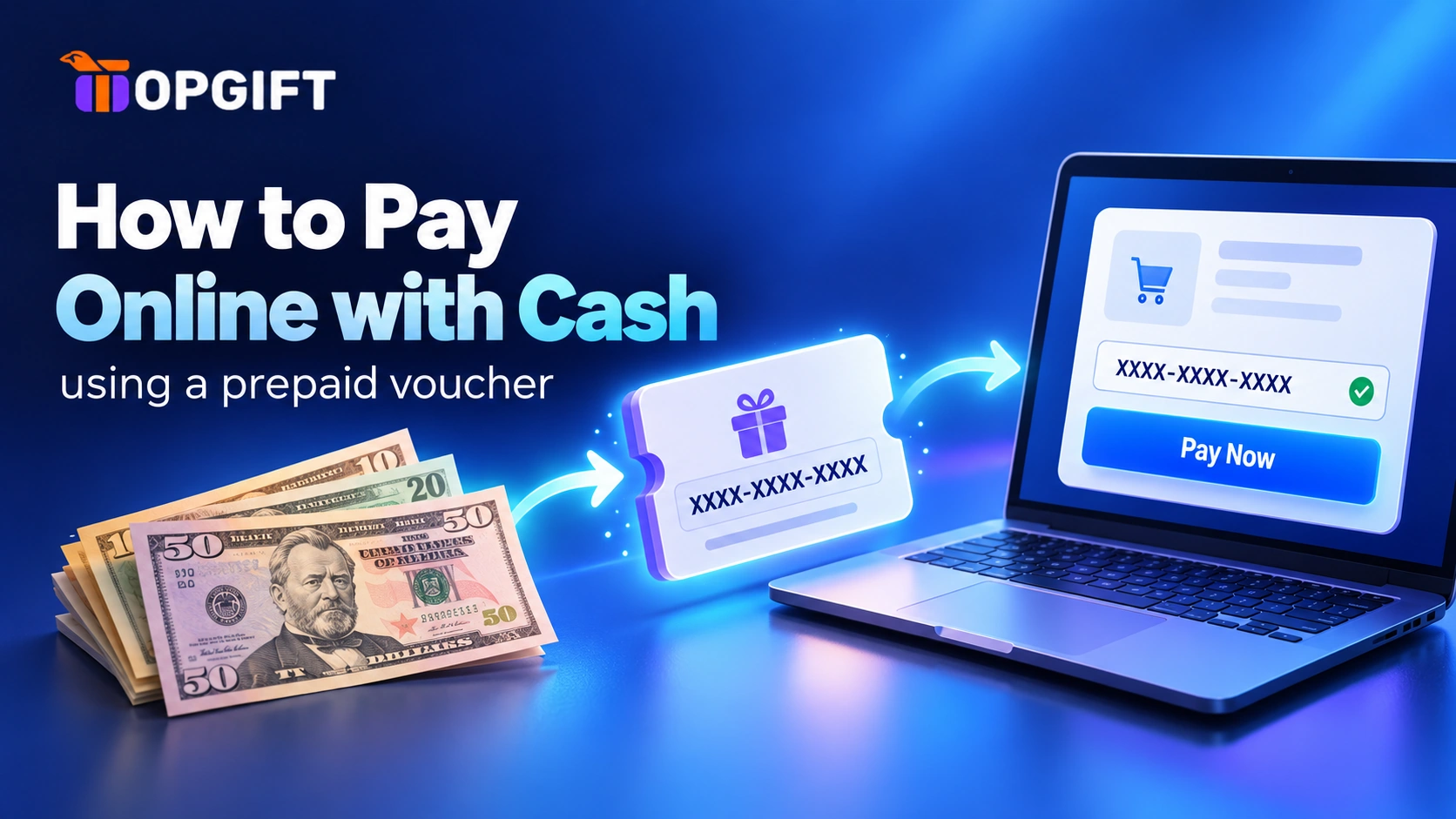
The idea is simple. You exchange money for a code, and the code then works as a payment method online.
Traditionally, you buy these vouchers for cash at a kiosk, a petrol station or a newsagent. Many of them are also sold digitally, which helps when there is no shop nearby or the local one has run out. Either way, the result is the same: a code with a fixed value, ready to use.
How you spend that code depends on the voucher. You enter some directly at a shop’s checkout, much like a card number. Others top up an app or account first, which you then use to pay. The three below cover both approaches, so it is worth knowing which is which before you buy.
| Voucher | How you use it | Best for | Account needed |
|---|---|---|---|
| Paysafecard | 16-digit PIN at the shop’s checkout | Games, streaming, digital purchases | Not for everyday use |
| CashtoCode | eVoucher code at the shop’s checkout | Digital services, many currencies | No |
| Aircash | Tops up your Aircash account first | Several purchases from one balance | Yes, an Aircash account |
Paysafecard
Paysafecard is the best-known cash voucher in Europe, and for good reason. It has been around for years, a huge number of shops sell it, and a wide range of online merchants accept it.
Using it is straightforward. At a shop that accepts Paysafecard, you choose it as the payment method and type in the 16-digit PIN. The shop deducts the amount from the voucher, and any remaining balance stays on the PIN for next time.
It works particularly well for games, streaming, online entertainment and digital purchases. Each voucher belongs to a specific country and currency, so pick the version that matches where you will be spending it.
Get Paysafecard →CashtoCode
CashtoCode exists to solve exactly this problem: letting people who prefer cash pay online. A growing number of online merchants accept it, particularly in digital services and gaming.
With the eVoucher version, you receive a code and enter it at the checkout of a shop that accepts CashtoCode. The payment goes through, and the merchant never sees any card or bank details.
CashtoCode vouchers come in many currencies, which makes them useful beyond Europe. As with any voucher, match the currency to the shop you plan to pay.
Get CashtoCode eVouchers →Aircash
Aircash works differently from the other two. Rather than entering the code at a shop, you use it to top up an Aircash account, which you then use to pay.
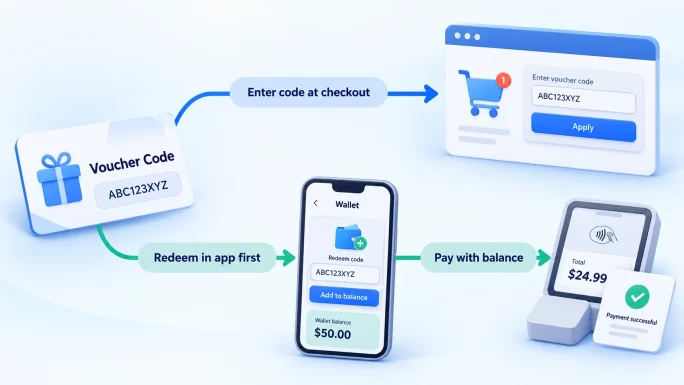
That extra step brings a benefit. Once the money sits in your Aircash balance, you can use it across several purchases, pay online wherever shops take Aircash, and keep track of what you have spent in one place.
Aircash offers vouchers for specific countries, including the Netherlands, Germany, Austria, Spain, Belgium, Slovakia and Cyprus. Choose the one matching your Aircash account.
Get Aircash Vouchers →Where These Vouchers Are Accepted
The honest answer is: not everywhere. Gaming, digital content, entertainment and online services widely accept cash vouchers. They are much less common at mainstream retailers, which usually stick to cards and bank payments.
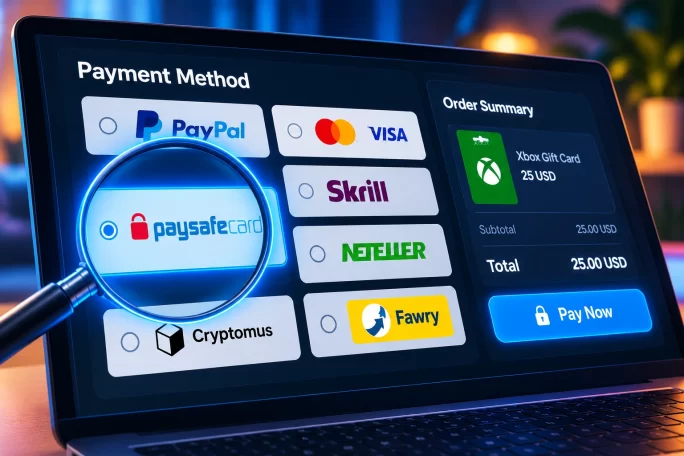
The easiest check is the checkout itself. Before you buy a voucher, open the shop’s payment page and look for the logo. If it isn’t listed, the voucher won’t work there, however many other shops accept it.
There are more cash-style options beyond these three. Flexepin and CASHlib work in a similar way, and each has its own list of merchants. When one isn’t available, another often is.
Limits, Leftover Balance and Refunds
Cash vouchers come with a few rules that are worth knowing upfront, because they differ from a bank card.
Spending limits apply. Issuers set maximum amounts, and some ask you to create an account or verify your identity once you go beyond a certain level. This is normal anti-fraud practice, and the exact limits depend on the voucher and the country.
Leftover balance usually stays usable. If a purchase costs less than the voucher, the remainder typically stays on the code or in your account for next time. Check the voucher’s own terms, though, because some issuers charge a fee if a balance sits unused for a long time.
Refunds work differently too. A shop that refunds a voucher payment usually does so according to its own policy, and you can’t simply return a code you have already redeemed. Keep your receipt and the code until the purchase is complete.
Staying Safe With Cash Vouchers
Because a voucher code works like cash, scammers love it. The most common trick is a phone call or message demanding payment by voucher. It might claim to be the tax office, the police, a utility company or a delivery service. They ask you to buy a voucher and read out the code.
No legitimate organisation ever asks for payment this way. The moment someone wants a voucher code over the phone or by message, it is a scam. Our guide to gift card scams in 2026 covers these tactics in more detail.
The other rule is simple. Only enter a code on the official checkout of the shop you are paying, or in the issuer’s own app. Never type it into a link someone sent you.
Frequently Asked Questions
Can I really pay online with cash?
Yes. You exchange cash for a prepaid voucher, then use its code as the payment method online. The shop receives the payment without any card or bank details.
What is the most widely accepted cash voucher?
In Europe, Paysafecard is the best known and most widely accepted. CashtoCode, Flexepin and CASHlib are good alternatives where Paysafecard isn’t listed.
Do I need a bank account to use these vouchers?
No. That is one of their main advantages. Some issuers may ask you to create an account or verify your identity for larger amounts.
What happens to the money left on a voucher?
It usually stays available for your next purchase. Some issuers charge a fee on balances left unused for a long time, so check the terms of your voucher.
Is paying with a voucher safe?
Yes, as long as you enter the code only at a genuine checkout or in the issuer’s official app. Anyone asking you to read a code over the phone is running a scam.
Can I use a voucher from one country in another?
Usually not. Each voucher belongs to a specific country and currency, so choose the version that matches the shop or account you will be using.