You picked a gift card, paid for it and then got a message asking you to confirm your identity. It is a common moment of confusion, and sometimes of worry. However, verification is one of the main reasons digital gift cards stay safe to buy. This guide explains why online gift card shops ask for account verification, what you may need to send, how to get through it quickly and what an honest shop will never ask for.
Gift card shops ask for account verification to stop stolen cards, fraud and money laundering. At TopGift, verification is not required for every order. It is usually requested for higher limits, unusual payments or when payment details cannot be confirmed, and it normally means a photo ID, a selfie and sometimes proof of your payment method.
Account Verification in Simple Terms
Account verification simply means proving that you are a real person and that the payment you used belongs to you. In the payment world, people often call this KYC, which stands for Know Your Customer.
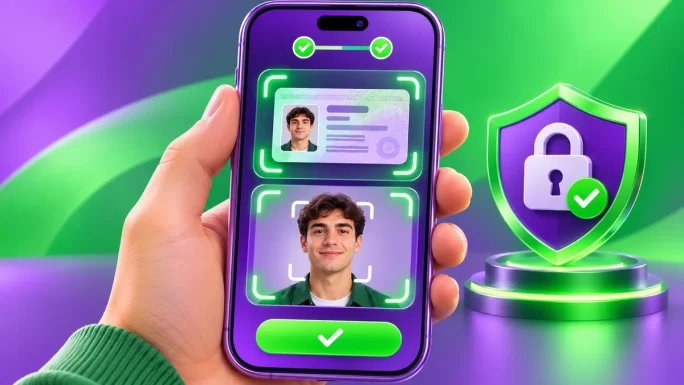
In practice, it is very similar to what banks, crypto exchanges and many online wallets already do. You show an ID document, sometimes take a selfie, and the shop or its verification partner checks that the details match. As a result, the shop knows it is dealing with the real account owner rather than someone using stolen details.
At TopGift, verification is not automatic for every customer. Most orders go through without any checks at all. Verification only comes into play in specific situations, which we explain below.
It also helps to know who is involved. Besides TopGift itself, payment providers and product suppliers have their own fraud rules. Sometimes, we start a check because one of them needs extra confirmation before a payment or a code can be released.
Why Gift Cards Attract Fraudsters
Digital gift cards arrive within minutes, they work worldwide and they are easy to resell. Unfortunately, those are exactly the qualities that criminals look for.
- Stolen bank cards: fraudsters use card details stolen online to buy gift cards, then resell the codes for cash.
- Chargebacks: when the real cardholder disputes the payment, the shop loses both the money and the code.
- Money laundering: criminals try to turn illegal funds into clean, spendable value.
- Account takeovers: criminals use hacked customer accounts to place orders in someone else’s name.
Every successful fraud makes cards more expensive for honest buyers and puts payment methods at risk. Therefore, verification protects not only the shop, but also you and every other customer who wants to keep paying with cards, wallets and vouchers.
Gift cards are also a favorite tool of phone and romance scammers, who convince victims to buy codes and send them over. Verification and order reviews help shops spot these situations, for example when someone suddenly buys many high-value cards in a short time.
When TopGift May Ask for Account Verification
According to our AML and KYC Policy, we may ask for verification in a limited number of situations:
- before we accept or deliver an order,
- after payment, but before the code is sent,
- when you ask for higher purchase limits,
- when your customer or payment details cannot be confirmed,
- when a payment provider or product supplier requests it,
- when the law or an authority requires it.
In other words, something specific usually triggers a verification request, such as a large order, a new payment method or details that do not line up. Also, we may occasionally ask customers who passed verification before to update their information.
We check some product types more often than others. For example, prepaid payment cards and crypto gift cards carry stricter rules from payment partners than a small game top-up. As a result, the same customer may buy a Steam card without any questions, yet need to show an ID when ordering a large crypto voucher.
What Documents You May Need
The exact list depends on the situation, but these are the documents we may ask for:
Possible verification documents
| Document | What it confirms |
|---|---|
| Passport, ID card or driving licenceMost common | Your identity and date of birth |
| Selfie or liveness check | That you are the person on the ID |
| Proof of address, issued within 3 months | Where you live |
| Photo of your payment card | That the card belongs to you |
| Payment confirmation or bank statement | That you made the payment |
| Source of funds information | Only in rare, higher-risk cases |
Usually, an ID and a selfie are enough. We only ask for additional documents when we really need them, and the request always explains what to send.
If we ask for proof of address, a recent utility bill, bank statement or official letter usually works. It should show your full name and address and be no older than three months. We can also accept screenshots of online banking, as long as all the required details are visible.
Photos That Pass the First Time
Most delays happen because of blurry or incomplete photos. A few simple habits help your documents pass on the first try:
- Use daylight: soft natural light works better than a flash, which causes glare.
- Show all four corners: the whole document must be visible, with nothing cut off.
- Keep it sharp: hold the phone steady and tap the screen to focus before you shoot.
- Check the date: the system rejects expired documents, so make sure yours is still valid.
- Do not edit: filters, crops that hide details and screenshots of photos often fail.
- For the selfie: face the camera, remove sunglasses and hats, and follow the on-screen prompts.
Also, make sure the documents belong to you. We cannot accept documents of a family member or a friend, even if they paid for the order on your behalf.
Showing Your Payment Card Safely
Sometimes we need to see that the bank card used for a payment really belongs to you. In that case, you only show part of the card, never the full details.
How to photograph your payment card
The easiest way is to cover the middle digits and the back of the card with a small piece of paper. This shows enough to confirm the card without giving anyone the ability to use it.
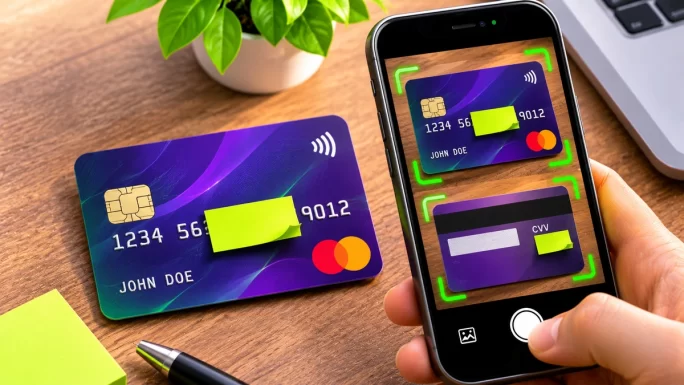
If you use a virtual card from a banking app, a screenshot of the card details screen works the same way. Hide the middle digits and the CVV before sending it, and make sure your name and the last four digits remain readable.
What We Will Never Ask For
This part matters just as much as the rest of the guide. Knowing what a real shop does not ask for is the best protection against scammers who pretend to be support staff.
TopGift will never ask forYour card PIN, CVV or CVC code, one-time passwords, 3-D Secure codes, online banking passwords, crypto private keys or wallet seed phrases. Anyone asking for these is a scammer.
Scammers often copy the look of real verification messages. So, if someone contacts you through social media or chat and asks for codes or passwords to “verify” an order, stop and contact our support directly. Our scam warning page, the guide to gift card scams in 2026 and our tips on how to spot a fake gift card seller explain the most common tricks.
Remember, a genuine request will always come from TopGift’s official email or from our support team at support@topgift.io. If you are not sure, log in to your account directly instead of clicking a link, and check whether the order really needs any action.
Name Matching During Account Verification
One of the most frequent reasons for a check is a name mismatch. For example, the name on your TopGift account may differ from the name on the card or wallet used to pay.
Even small differences can trigger a review, such as a missing accent, a shortened first name or a different spelling of a surname. Usually, these cases are harmless, and a quick ID check clears them up.
Names written in different alphabets can also cause mismatches. For instance, a name written in Cyrillic or Greek on a bank card may look different on the account after transliteration. In that case, an ID document quickly confirms that both spellings belong to the same person.
To avoid delays, use your full legal name on your account and pay with a payment method in your own name. If you pay with a card that belongs to someone else, even a family member, expect us to hold the order until the cardholder’s consent is confirmed.
Account Verification Is Not an Accusation
It is easy to feel suspected when a shop asks for documents. However, our policy states it clearly: a request for verification does not mean that a customer is accused of anything.
Most checks are automatic. Anti-fraud systems look at hundreds of signals, such as order size, location and payment method, and they flag orders that look unusual. Often, an honest customer simply ordered more than usual or used a new card.
So, the best way to think about verification is as a seatbelt rather than an accusation. It costs a few minutes, and it keeps the whole system safer for everyone.
In addition, verification sometimes protects you directly. If someone gained access to your account or your card details, a check stops them from receiving codes in your name. In that situation, the short delay is exactly what keeps your money safe.
Higher Limits After Account Verification
Verification is not mandatory for ordinary orders at TopGift. Nevertheless, it unlocks one clear benefit: higher purchase limits.
If you regularly buy larger amounts, for example for a business, for a family or for gaming top-ups, a verified account lets you order more without extra holds. Moreover, once your documents are on file, future orders usually go through faster.
To request higher limits, contact our support team and mention that you would like to verify your account. Keep in mind that completing verification does not automatically guarantee a specific limit, because we review each request individually.
How Long Account Verification Takes
We handle most checks quickly once everything needed is in place. In practice, the speed depends almost entirely on the quality of what you send.
Getting verified without delays
The most common reasons for a slower review are blurry photos, missing pages, expired documents and names that do not match. Therefore, a careful first submission is the fastest route to your code.
Also, keep in mind that some checks happen outside business hours or involve a payment provider. In those cases, a short wait is normal and does not mean anything is wrong.
One Account per Customer
Each customer may only have one TopGift account. Creating several accounts to get around limits, reuse promotions or hide related orders is not allowed.
If we detect multiple accounts linked to the same person, we may restrict all of them and ask for extra verification. Therefore, if you forgot your password, simply use the password recovery option instead of opening a new account.
This rule also protects you. A single verified account builds a clean order history, which makes future checks rarer and faster.
If you share a device with family members, each person should still use their own account. That way, every order is linked to the right person, and nobody’s purchases trigger checks on someone else’s account.
How Your Data Is Protected
Sending ID documents online can feel risky, which is completely understandable. Here is how we handle your information:
- Purpose-limited: we only request information relevant to the verification.
- Protected processing: we handle documents under our Privacy Policy and applicable data-protection rules.
- Trusted partners: where needed, we share data only with verification providers, payment providers or authorities that are legally allowed to receive it.
- No card secrets: we never ask for full card numbers, CVV codes or passwords.
In addition, always send documents through the official channel provided in the verification request or to support@topgift.io. Never send them to an address or account you found in a random message.
You Already Verify Elsewhere
If verification feels unusual, it may help to remember how common it already is. You have probably gone through similar checks many times without noticing.
- Banks and e-wallets: opening an account with a bank, Revolut, Wise, Skrill or PayPal requires ID checks.
- Crypto platforms: exchanges such as Binance verify users before allowing larger deposits and withdrawals.
- Marketplaces and payment apps: many ask sellers and buyers to confirm their identity before larger transactions.
Compared with these services, gift card verification is usually lighter, and shops only ask for it when there is a clear reason. For a related example, see our article on whether Binance is safe, which also covers how verification protects users.
In short, verification is not a sign that something is wrong with a shop. On the contrary, a store that never checks anything is often a bigger risk, because stolen codes and fraud tend to end up there.
What Happens If You Skip Verification
Verification is optional for most orders, but when we ask for it, you need to complete it. If it is not, or if the documents cannot be confirmed, several things may happen:
- the order may be delayed or cancelled,
- higher limits may not be granted,
- some products or payment methods may be restricted,
- in serious cases, the account may be suspended.
If we cancel an order, we handle any refund according to our Refund Policy. For the fastest result, reply to a verification request as soon as possible and follow the instructions exactly.
Shop With Confidence
Verification is only a small part of the TopGift experience. For most customers, an order takes a few minutes from payment to code. Here is where to start:
- Digital gift cards: shopping, streaming and app store cards for hundreds of brands.
- Gaming cards: Steam, PlayStation, Xbox, Nintendo, Roblox and more.
- Prepaid payment cards: vouchers and prepaid cards for paying online without a bank card.
- Crypto gift cards: an easy way to buy or gift crypto.
If you prefer not to use a bank card at all, our guide on how to pay online without a bank card explains the alternatives. And if you have any questions about verification, our FAQ and support team are always happy to help.
Frequently Asked Questions
No. At TopGift, most orders need no verification. We mainly ask for it for higher limits or when we need to confirm payment details.
Usually because something needed a quick check, such as a name mismatch, a new payment method or a larger order. A request does not mean you are accused of anything.
Most often a passport, ID card or driving licence and a selfie. Sometimes we also need proof of address or a photo of your payment card.
Leave the first six and last four digits and your name visible, and cover the middle digits and the CVV code.
Never. TopGift will never ask for a PIN, CVV, one-time password, 3-D Secure code, banking password or crypto seed phrase.
No. Each customer may only have one account, and we may restrict multiple accounts.
Key Takeaways