XRP is one of the oldest and best-known cryptocurrencies, and it regularly ranks among the largest coins by market value. It’s built for one job above all: moving money quickly and cheaply. So what is XRP, and how is it different from Ripple, the company people often confuse it with?
This guide explains how the XRP coin works, where it came from and what it’s used for. It also compares XRP with Bitcoin, shows how to get XRP with a gift card and covers the mistakes and risks to know before you buy.
XRP is the native coin of the XRP Ledger, a public blockchain built for fast, low-cost payments. Transfers usually settle in 3 to 5 seconds and cost a tiny fraction of a cent. Ripple is a separate company that uses XRP and holds a large share of it. You can get XRP without a bank card by redeeming a Binance Gift Card XRP.
What Is XRP
XRP is a digital currency that runs on the XRP Ledger, an open blockchain that has been live since 2012. Anyone can use it to send value across the world, and transfers don’t depend on banks or business hours.
Unlike Bitcoin, the XRP coin was never mined. The ledger created all 100 billion coins at launch, and nobody can ever add new XRP. In fact, every transaction fee destroys a tiny amount.
XRP coin at a glance
Today, around 60 billion XRP are in circulation. Most of the rest sits in escrow controlled by Ripple, which releases it on a fixed schedule.
A Short History of XRP
XRP has a long and eventful past. These are the key moments:
2012David Schwartz, Jed McCaleb and Arthur Britto launch the XRP Ledger.
2017Ripple locks 55 billion XRP in escrow to make its supply predictable.
January 2018XRP reaches its all-time high of about $3.84.
December 2020The US SEC sues Ripple, and several exchanges pause XRP trading.
August 2025The SEC case officially ends after almost five years.
November 2025The first US spot XRP ETFs start trading.
In short, XRP survived a long legal fight and came out with much clearer rules. As a result, it’s now available on major exchanges and in regulated funds again.
How the XRP Ledger Works
Most blockchains use either mining or staking to agree on transactions. The XRP Ledger does neither. Instead, a network of independent validators compares proposed transactions and agrees on the result every few seconds.
That design keeps the network fast and light. A standard transfer costs about 0.00001 XRP, and the ledger can confirm thousands of transactions per second. Since there’s no mining, it also uses very little energy.
There is one rule beginners should know. Every XRP wallet must keep a small reserve of 1 XRP, and that amount can’t be sent out. So if you open a new wallet, you need to send it at least 1 XRP before it works.
XRP and Ripple Are Not the Same
People often use “Ripple” and “XRP” as if they mean the same thing, but they don’t. XRP is the coin, and the XRP Ledger is the open network it runs on. Ripple, on the other hand, is a US company that builds payment products using that network.
Ripple holds a large amount of XRP, mostly in escrow. Each month, up to 1 billion XRP unlocks, and Ripple usually locks most of it again. Even so, the XRP Ledger would keep running without Ripple, because the company doesn’t control the validators.
Ripple also runs its own dollar stablecoin, RLUSD, on the XRP Ledger. However, you don’t need XRP to use it.
XRP vs Bitcoin
XRP and Bitcoin are both well-known cryptocurrencies, but they serve different goals:
XRP
Main purposeFast payments and transfers
Settlement time3 to 5 seconds
Typical feeA fraction of a cent
How coins are createdAll created at launch
Supply100 billion, fixed
Bitcoin
Main purposeLong-term store of value
Settlement timeAbout 10 minutes per block
Typical feeOften much higher
How coins are createdMined over time
Supply21 million, fixed
In other words, Bitcoin focuses on being scarce and secure, while XRP focuses on speed and low cost. Many people hold both for those different reasons.
What the XRP Coin Is Used For
XRP has several practical uses:
- Cross-border payments: banks and payment firms can use XRP as a bridge between two currencies.
- Everyday transfers: you can send XRP to anyone in seconds, at almost no cost.
- Trading: the XRP Ledger has a built-in exchange where users trade tokens directly.
- Holding stablecoins and tokens: the network also supports other assets, with XRP covering the fees.
Keep in mind that XRP has no built-in staking. Unlike Solana or Ethereum, you can’t earn network rewards just by locking it up. For a comparison, see our guide to what Solana is.
How to Get XRP With a Binance Gift Card
The easiest way to get XRP without linking a bank card is a Binance Gift Card XRP. It’s a code that loads XRP straight into your Binance account:
The card comes in small amounts, so it’s easy to start with a little XRP first. Our step-by-step guide on how to buy XRP with a gift card covers the details.
XRP on Binance
Binance Gift Card XRP
Redeem the code in the Binance app and the XRP lands in your Funding wallet. Small amounts available.
Buy Binance Gift Card XRPOnce you have XRP, you can keep it on Binance or move it to your own wallet. Before you send it anywhere, read the next section.
Common Mistakes When Sending XRP
XRP transfers are fast, but nobody can reverse them. These are the mistakes beginners make most often:
Common XRP mistakes
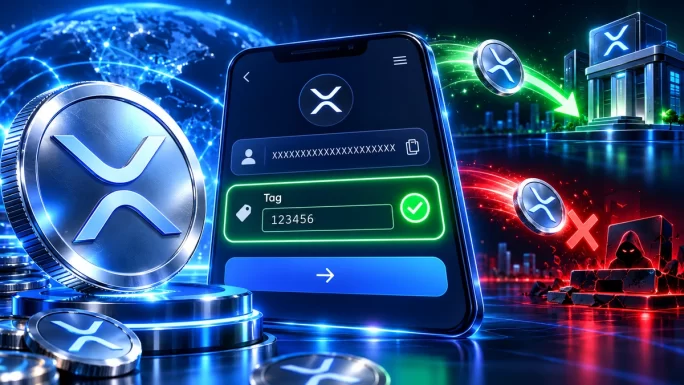
WhyExchanges use one address for many users and tell them apart by a tag.
FixAlways copy both the address and the tag when you send XRP to an exchange.
WhyThe wallet needs at least 1 XRP as a reserve before it activates.
FixSend more than 1 XRP the first time.
WhyXRP also exists as a wrapped token on other networks.
FixChoose the XRP network when you withdraw from Binance.
WhyScammers promise to double any XRP you send them.
FixIgnore every giveaway that asks you to send coins first.
Our guide on how to withdraw crypto from Binance shows where to enter the address and the tag.
Risks to Know Before You Buy XRP
XRP is popular, but it isn’t risk-free. Keep these points in mind:
- Price swings: in mid-October 2026, XRP trades around $1.31, far below its 2018 high of about $3.84.
- Escrow releases: Ripple can unlock up to 1 billion XRP each month, which adds selling pressure if it doesn’t lock most of it again.
- Link to Ripple: news about the company often moves the XRP price, even though the network is independent.
- No staking: holding XRP doesn’t earn network rewards on its own.
This guide is for learning only and isn’t financial advice. Only put in what you can afford to lose, and decide for yourself which coins to hold.
Frequently Asked Questions
XRP is the native coin of the XRP Ledger, a public blockchain built for fast and cheap payments. Transfers settle in about 3 to 5 seconds and cost a tiny fraction of a cent. The maximum supply is fixed at 100 billion XRP.
No. XRP is the coin, and the XRP Ledger is the open network it runs on. Ripple is a company that uses the network for payment products and holds a large amount of XRP, mostly in escrow.
No. All XRP was created when the ledger launched in 2012, so there’s nothing to mine. The network also has no built-in staking, so holding XRP doesn’t earn rewards on its own.
A destination tag is a number that tells an exchange which user a deposit belongs to. When you send XRP to an exchange, always enter both the address and the tag, or the deposit may not reach your account.
Every XRP wallet must hold a reserve of 1 XRP to stay active. This small amount protects the network from spam. You can’t send it out, so always keep a little more than 1 XRP in a new wallet.
Yes. A Binance Gift Card XRP loads XRP straight into your Binance account. Redeem the code in the app under Gift Card, then Redeem, and the XRP appears in your Funding wallet within seconds.
Key Takeaways