Litecoin is one of the oldest cryptocurrencies still in use today. It launched in 2011, just two years after Bitcoin, as a lighter, faster version for everyday payments. So what is Litecoin, and why do people still use it after so many years?
This guide explains how the LTC coin works, where it came from and what makes it different from Bitcoin. It also covers the next halving in 2027, shows how to get LTC with a gift card and lists the risks to know before you buy.
Litecoin (LTC) is a cryptocurrency created in 2011 by former Google engineer Charlie Lee. It works much like Bitcoin, but blocks arrive every 2.5 minutes and fees are usually tiny. Its supply is capped at 84 million LTC. You can get LTC without a bank card by redeeming a Binance Gift Card LTC.
What Is Litecoin
LTC is a digital currency that runs on its own blockchain. Like Bitcoin, it uses mining to confirm transactions, and anyone can send LTC around the world without a bank in between.
People often call it the “silver to Bitcoin’s gold”. The idea is simple: Bitcoin for storing value, Litecoin for faster and cheaper everyday payments.
LTC coin at a glance
Today, around 77 million LTC are already in circulation. In other words, miners have already created most of the coins that will ever exist.
A Short History of Litecoin
The coin has been around for a long time. These are the key moments:
October 2011Charlie Lee launches Litecoin as a lighter version of Bitcoin.
2017Litecoin becomes one of the first big coins to adopt SegWit, a major scaling upgrade.
May 2021LTC reaches its all-time high of about $410.
May 2022The MWEB upgrade adds optional private transactions.
August 2023The third halving cuts the mining reward to 6.25 LTC.
October 2025The first US spot Litecoin ETF starts trading.
In short, LTC has often tested new features before Bitcoin did. As a result, it earned a reputation as a reliable testing ground for Bitcoin-style technology.
How Litecoin Works
Like Bitcoin, LTC uses Proof of Work. Miners use computers to secure the network and earn new LTC as a reward. However, it uses a different mining method called Scrypt, and many miners also mine Dogecoin at the same time.
A new block appears about every 2.5 minutes, which is four times faster than Bitcoin. In practice, that means payments confirm sooner, and fees usually stay at a fraction of a cent.
The network also has an optional privacy feature called MWEB. It lets users hide the amount of a transaction if they choose to. However, some exchanges limit or don’t support MWEB transactions, so regular transfers are the safer choice for beginners.
The Next Litecoin Halving
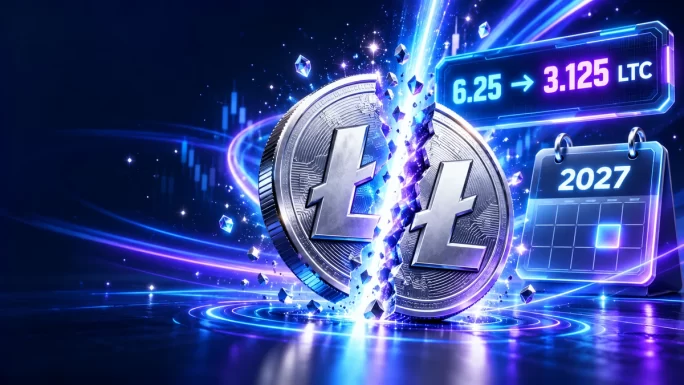
Every four years or so, the reward that miners receive for each block is cut in half. People call this event a halving, and it slows down how fast new LTC enters the market.
Experts expect the next halving around July 2027. At that point, the block reward will drop from 6.25 LTC to 3.125 LTC. Since fewer new coins will appear, many people watch the halving closely, although it doesn’t guarantee a price rise.
Litecoin vs Bitcoin
Litecoin started as a copy of Bitcoin’s code, so the two coins have a lot in common. Still, there are some important differences:
Litecoin
Main purposeEveryday payments
Block timeAbout 2.5 minutes
Typical feeA fraction of a cent
Maximum supply84 million
Network sizeSmaller
Bitcoin
Main purposeLong-term store of value
Block timeAbout 10 minutes
Typical feeOften much higher
Maximum supply21 million
Network sizeThe largest in crypto
In other words, Bitcoin is bigger and more secure, while Litecoin is faster and cheaper to use. For small transfers, Litecoin often makes more sense.
What the LTC Coin Is Used For
The coin has several practical uses:
- Payments: many online shops and payment services accept LTC because it’s fast and cheap.
- Sending money: you can move LTC across the world in minutes, at very low cost.
- Moving funds between exchanges: traders often use LTC to transfer value quickly.
- Holding: some people keep LTC as a long-term investment because of its limited supply.
If you want to start small, our guide to the best crypto for small amounts compares Litecoin with other beginner-friendly coins.
How to Get LTC With a Binance Gift Card
The simplest way to get Litecoin without a bank card is a Binance Gift Card LTC. It’s a code that loads LTC straight into your Binance account:
The card comes in small amounts, so it’s easy to try Litecoin with a little money first. Our step-by-step guide on how to buy Litecoin with a gift card covers the details.
Litecoin on Binance
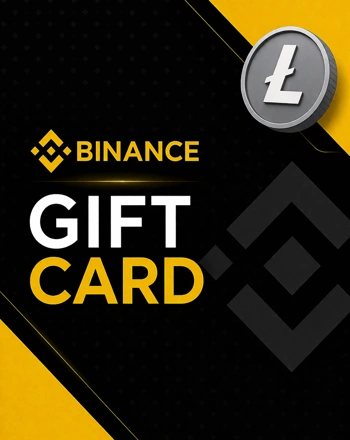
Binance Gift Card LTC
Redeem the code in the Binance app and the LTC lands in your Funding wallet. Small amounts available.
Buy Binance Gift Card LTCOnce you have LTC, you can keep it on Binance or move it to your own wallet. Our guide on how to withdraw crypto from Binance shows how to choose the right network.
Risks to Know Before You Buy LTC
LTC has a long track record, but it isn’t risk-free. Keep these points in mind:
- Price swings: in October 2026, LTC trades around $60, far below its 2021 high of about $410.
- Strong competition: newer networks also offer fast and cheap payments, which puts pressure on Litecoin.
- Smaller network: Litecoin has less mining power than Bitcoin, so it’s less secure in comparison.
- Halving hype: the 2027 halving gets a lot of attention, but past halvings didn’t always lead to higher prices.
This guide is for learning only and isn’t financial advice. Only put in what you can afford to lose, and decide for yourself which coins to hold.
Frequently Asked Questions
Litecoin is a cryptocurrency created in 2011 by Charlie Lee as a faster, lighter version of Bitcoin. Blocks arrive every 2.5 minutes, fees are very low and the supply has a hard cap of 84 million LTC.
Litecoin confirms blocks about four times faster and usually has lower fees. Bitcoin, on the other hand, is much bigger and has a smaller supply of 21 million coins, so it’s mainly seen as a store of value.
It should happen around July 2027. At that point, the mining reward drops from 6.25 LTC to 3.125 LTC per block, which slows down how many new coins enter the market.
There will never be more than 84 million LTC, and around 77 million are already in circulation. Miners will create the rest slowly over many years, with each halving reducing the pace.
Nobody can predict that. Litecoin has a long history and a fixed supply, but its price can swing sharply and it faces strong competition. Treat it as a risky asset and only put in money you can afford to lose.
Yes. A Binance Gift Card LTC loads LTC straight into your Binance account. Redeem the code in the app under Gift Card, then Redeem, and the LTC appears in your Funding wallet within seconds.
Key Takeaways