Few things in crypto have swung as far as NFTs. In 2021 they were everywhere, from auction houses to football shirts. By 2023 they were a punchline. In 2026 the truth sits somewhere less dramatic than either story, and it is worth understanding properly before you buy, sell or simply write them off.
This guide covers what an NFT actually is, what the market looks like now that the noise has gone, and what to check if you are still considering one.
In this guide
What an NFT Is, Minus the Hype
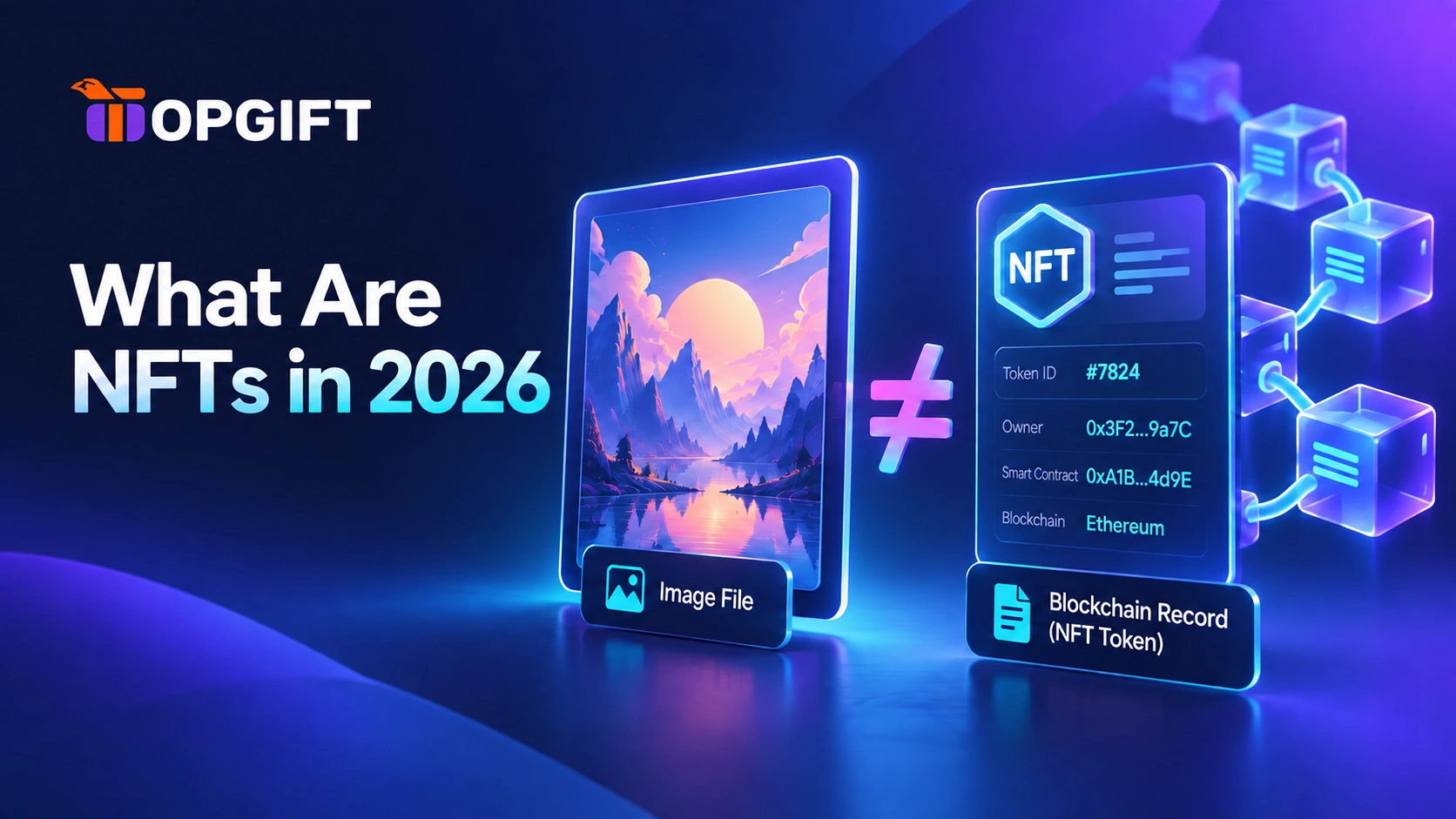
An NFT is a record on a blockchain saying that a specific item belongs to a specific address. Non-fungible simply means each one is distinct. One bitcoin equals any other bitcoin. One NFT does not equal another, even from the same collection.
What that record actually contains matters more than most buyers realise. In most cases, the blockchain holds a token and a link. The image, the music or the ticket usually lives somewhere else, on ordinary web hosting or a distributed storage network. You own the entry in the ledger, not the file itself.
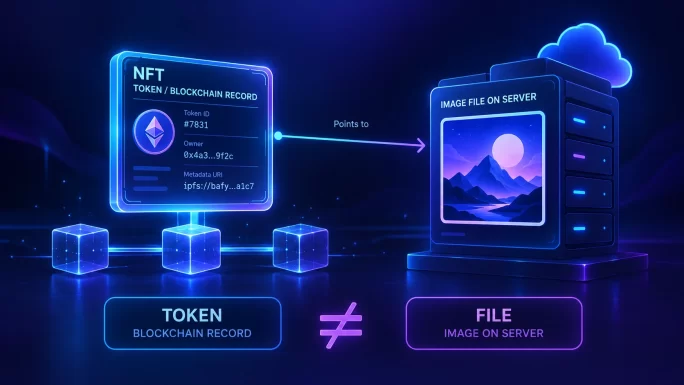
Owning an NFT also doesn’t automatically give you copyright. Some projects grant broad commercial rights, others grant almost nothing. That is decided by the project’s own licence, not by the blockchain.
Where the Market Actually Stands
The honest picture in 2026 is a market that shrank dramatically, then settled into something smaller and more selective.
Total NFT trading volume in 2025 came to roughly 5.5 billion dollars, around 37 percent below 2024. For comparison, a single marketplace processed more than that in one month at the 2022 peak. Average sale prices tell the same story: reports put the average around 321 dollars in January 2025 and around 54 dollars by October.
| Measure | At the peak | Now |
|---|---|---|
| Trading volume | Billions in a single month | Around $5.5bn across all of 2025 |
| Average sale price | Hundreds of dollars | Around $54 by late 2025 |
| Active collections | Almost anything sold out | Roughly 5 percent see real trading |
| What drives demand | Speculation and hype | Culture, art, and practical uses |
Activity did pick up in early 2026. Ethereum NFT volume averaged roughly 720 million dollars a month in the first quarter, a meaningful rebound from the low point. That is a recovery from the bottom, though, not a return to the boom. Analysts describe the market as K-shaped: a narrow group of collections attracting most of the remaining money, and everything else flat.
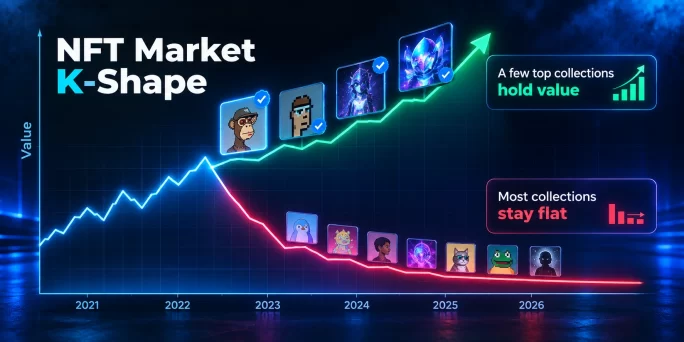
One number matters more than all the others. Studies of thousands of collections consistently find that around 95 percent of them show almost no trading activity at all.
Why Most Collections Went to Zero
The collapse wasn’t random, and the pattern is clear in hindsight.
Most collections had nothing behind them. Ten thousand generated images, a roadmap full of promises, and a community that existed only while prices rose. When new buyers stopped arriving, there was no reason for anyone to hold, and no floor under the price.
Liquidity disappeared even faster than value. An NFT is only worth what someone will pay today, and with no buyers, a listed price is a number rather than a valuation. Plenty of people discovered that the thing they “own” cannot be sold at any price.
Teams walked away too. Projects were quietly abandoned, social accounts went silent, and promised features never shipped. Even some high-profile collections lost the overwhelming majority of their peak value.
What Actually Survived
Two categories held up, and neither is about flipping pictures.
The first is genuine collectibles with cultural weight. A small number of early or artistically significant collections kept an audience of long-term collectors, much like traditional art or rare objects. They trade rarely, at prices far below the peak, but they trade.
The second is NFTs used as a mechanism rather than a product. Event tickets that can’t be forged, memberships that unlock access, certificates of authenticity, in-game items that work across platforms. In these cases nobody is buying a JPEG. The token quietly does a job, and often the user barely notices it is an NFT at all.
That shift explains why marketplaces changed too. The largest ones have expanded into general crypto trading rather than relying on NFT fees alone.
When a Marketplace Shuts Down
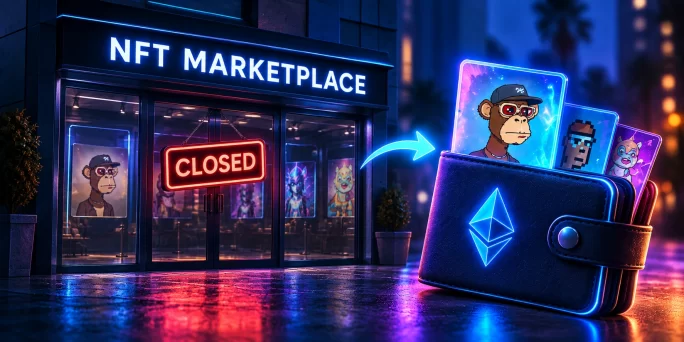
Marketplace closures became a real risk rather than a theoretical one. Foundation, once a prominent platform for digital artists, shut down in April 2026 after a rescue deal collapsed.
Here is the part worth understanding. Your NFT does not live on the marketplace. It lives on the blockchain, tied to your wallet address, and it stays there whether or not the platform that sold it exists.
What you can lose is everything around it. The page displaying the artwork, the collection’s description, and sometimes the hosted image file itself if the project paid for that hosting. This is why collections that store their files on decentralised storage tend to survive better than those pointing at an ordinary website.
If You Are Thinking of Buying One
None of this is financial advice, and NFTs remain among the least liquid things you can buy in crypto. If you do want one, a few checks separate a considered purchase from a costly mistake.
- Check the contract address against the project’s own site or verified account, never against a link someone sent you.
- Look at real trading history, not the listed floor price — how many sales happened in the last month, and at what prices.
- Find out where the file is stored, since a project hosting images on an ordinary website can lose them.
- Read what rights you actually get, because that comes from the project’s licence, not from the token.
- Use a wallet you control and treat every signature request as a permission you are granting.
Buy because you want the item, not because you expect someone to pay more later. In a market where most collections barely trade, the exit you are imagining may not exist.
The Scams Built Around NFTs
The smaller market didn’t shrink the scams. If anything, the people left behind are more experienced, and so are the people targeting them.
Wallet drainers are the main threat. A fake mint page, an airdrop notification or a “claim your free NFT” link asks you to sign a transaction. That signature isn’t a purchase. It grants permission to move your assets, and by the time you notice, the wallet is empty.
Fake collections are the second pattern. A copied image, a near-identical name, and a listing that looks legitimate until you check the contract address against the project’s official source.
The third is the recovery scam, which targets people who already lost something. Nobody can reverse a blockchain transaction, and anyone promising to recover your NFT for a fee is simply taking a second payment. Our guide to scam tactics in 2026 covers the same playbook in other settings, and our seed phrase guide explains the one rule that protects everything else.
Frequently Asked Questions
Are NFTs dead in 2026?
Not dead, but far smaller. Trading volume is a fraction of the peak, and around 95 percent of collections see almost no activity. A narrow group of collections and utility-based uses still sees real trading.
Do I own the artwork when I buy an NFT?
You own a blockchain record pointing to it. The file itself usually sits elsewhere, and the rights you get depend entirely on the project’s licence rather than on owning the token.
What happens to my NFT if the marketplace closes?
The NFT stays in your wallet on the blockchain. What can disappear is the page that displayed it, and sometimes the hosted image, depending on where the project stored it.
Can I still make money from NFTs?
Some people do, but most collections cannot be sold at all in practice. Treat it as an illiquid collectible market rather than an investment plan, and never commit money you would mind losing.
Why do I need a wallet to hold an NFT?
Because ownership is recorded against a wallet address. That also makes wallet security the whole game, since anyone controlling the wallet controls the NFT.
What is the safest way to avoid NFT scams?
Never sign a transaction you did not initiate, always verify a contract address through the project’s official channels, and treat any unexpected free NFT as bait rather than a gift.
🔑 Key takeaways
- An NFT is a record of ownership on a blockchain — usually a token plus a link, not the file itself.
- The market shrank sharply: most collections barely trade, and average prices fell to a fraction of the peak.
- What survived is cultural collectibles and practical uses like tickets, memberships and certificates.
- Your NFT stays in your wallet even if the marketplace that sold it closes.
- Never sign a transaction you did not initiate — that is how most NFT losses actually happen.