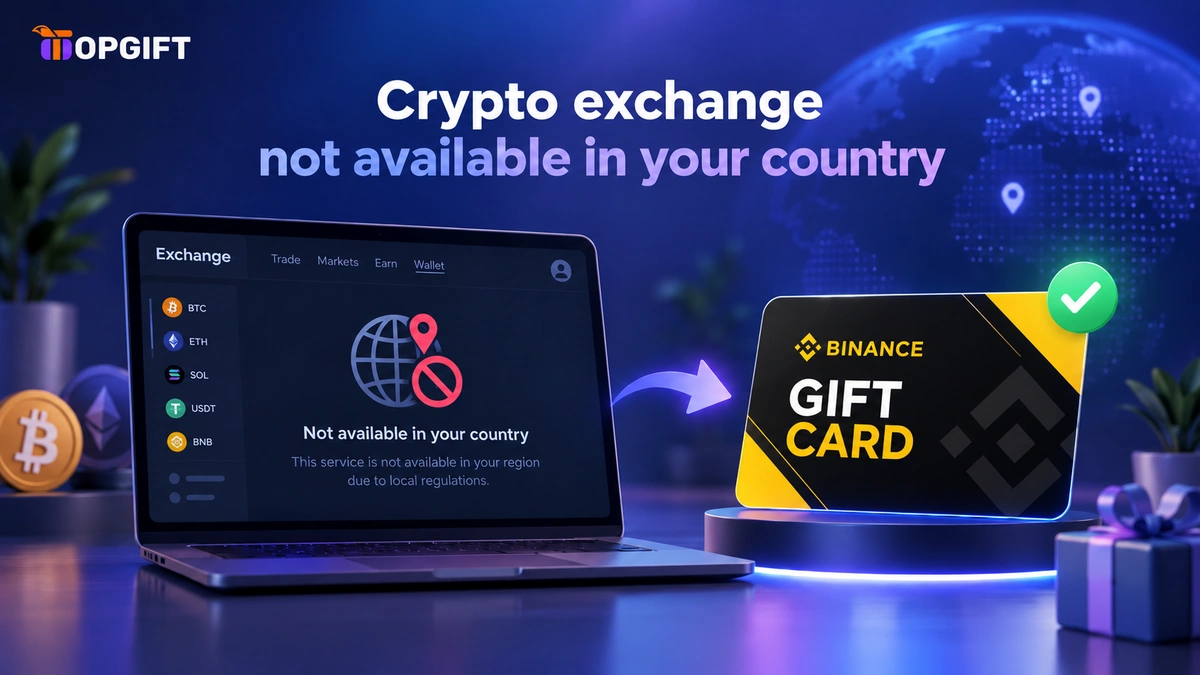
You find an exchange, start signing up, and the site stops you: not available in your region. It’s one of the more frustrating walls in crypto, partly because it appears without warning and partly because the reasons are never explained. Here’s what that message actually means, what people wrongly try next, and what genuinely works instead.
In this guide
What the Restriction Actually Means
When an exchange says it doesn’t operate in your country, it’s a business and legal decision, not a judgement about you. The platform hasn’t obtained the licence it needs to serve users there, or local rules make doing so impractical. Consequently, it blocks the whole country rather than risk operating without permission.
The block usually shows up in one of three ways. Sometimes registration is refused outright. Sometimes you can create an account but not deposit or trade. And sometimes an existing account keeps working until the platform closes it, which is the worst version — people have found funds locked mid-use when a platform exits a market.
Why Exchanges Block Whole Countries
Licensing is the main reason. Financial services are regulated territory by territory, and an exchange needs authorisation in each market it serves. Getting that authorisation costs time and money, so platforms prioritise the markets worth the effort and block the rest.
Sanctions and compliance rules account for some of it too. Moreover, a few countries restrict crypto directly, which leaves exchanges no choice regardless of what they’d prefer. In every case the decision sits above the user: nothing you do to your account changes it, because the block applies to the region, not the person.
What Not to Do
The advice you’ll see most often online is to use a VPN and pretend you’re somewhere else. It’s worth being blunt about why that’s a bad idea.
Exchanges verify identity, and identity documents show your country. A mismatch between your documents and your apparent location is exactly what their compliance systems look for. When they find it, the usual outcome is a frozen account — with the funds inside it. Recovering money from a frozen account is slow at best and impossible at worst, because you broke the terms you agreed to when you signed up.
Beyond the practical risk, it doesn’t solve anything permanently. Even if registration succeeds, withdrawal is where verification tightens, and that’s the moment people discover the problem. In short, the workaround that seems clever at signup becomes expensive at withdrawal.
Getting Crypto Without a Local Exchange
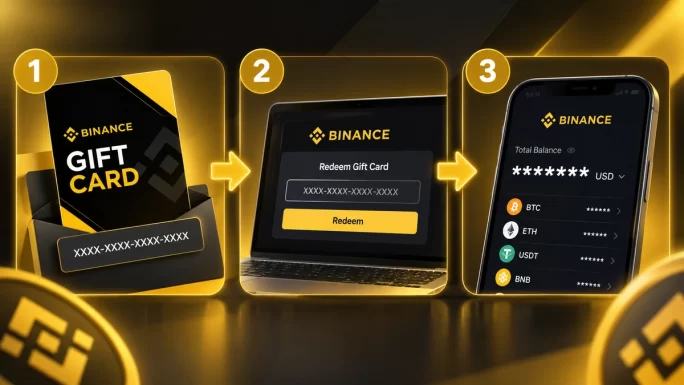
The workable route doesn’t involve pretending to be somewhere you aren’t. A crypto gift card lets you buy a prepaid code and redeem it for crypto, which sidesteps the signup problem entirely rather than lying about it.
The mechanic is simple. You buy a Binance Gift Card, receive a code, and redeem it on Binance — the crypto is credited to the account, with no card, no bank and no region-based payment method involved. Because you’re redeeming a code rather than depositing through a local payment rail, the usual funding obstacles don’t apply. Our redemption walkthrough covers the steps in detail.
It’s worth being precise about what this does and doesn’t solve. A gift card handles the funding problem — getting crypto without a bank card or a local payment method that the platform won’t take. What it can’t do is override a platform’s own regional rules if they block your account entirely. Check that the exchange itself is available to you first, then use the gift card to fund it.
If you’re still deciding which coin makes sense, our guide to choosing a first cryptocurrency explains the options by purpose rather than hype. And if the underlying issue is really about payment methods rather than the exchange itself, the broader guide to paying online without a bank card may be the more useful read.
Browse Binance Gift Cards →Frequently Asked Questions
Why does an exchange say it is not available in my country?
Because it lacks the licence to operate there, or local rules make it impractical. The restriction applies to the region, not to you personally, and nothing about your account changes it.
Can I use a VPN to access a restricted exchange?
You shouldn’t. Identity verification compares your documents with your activity, and a mismatch typically leads to a frozen account. Funds in a frozen account are difficult or impossible to recover, because using a VPN breaches the platform’s terms.
Will a gift card let me use an exchange that blocks my country?
No. A gift card solves funding, not access. If the platform blocks your region entirely, you need a platform that serves it. Where the exchange is available but the payment methods aren’t, a gift card works well.
What happens to crypto I already hold if an exchange leaves my country?
Platforms normally give notice and a window to withdraw. Moving funds out promptly is the safe response, since accounts usually close at the end of that window.
Can I buy crypto without any exchange account?
Some prepaid crypto vouchers work outside exchange accounts, though most routes still involve one at some stage. A gift card redeemed into an exchange you can legitimately use is the most straightforward option for most people.